Blog
2026 · 7 min read
PRF or PRP: What Does the Fibrin Scaffold Change?
PRF is spun once without anticoagulant, so growth factors release over about 10 days instead of one hour. Whether that produces a better result is a separate question.
Key facts
- PRF is spun once without anticoagulant, which lets fibrinogen polymerise into a scaffold that holds platelets and growth factors.
- Injectable PRF is spun at roughly 60 g for 3 minutes, while PRP is typically double-spun at far higher force.
- Growth factor release from PRF has been measured out to 10 days, compared with 95 percent of PRP released in the first hour.
- The only systematic review comparing PRP and PRF for periorbital rejuvenation found no evidence that either is superior.
- In the longest follow-up study, the PRF advantage over PRP at 3 months had disappeared by 6 months.
- For pigmentation and dark circles the evidence favours PRP, with one study reporting a 46.6 percent mean reduction in melanin area.
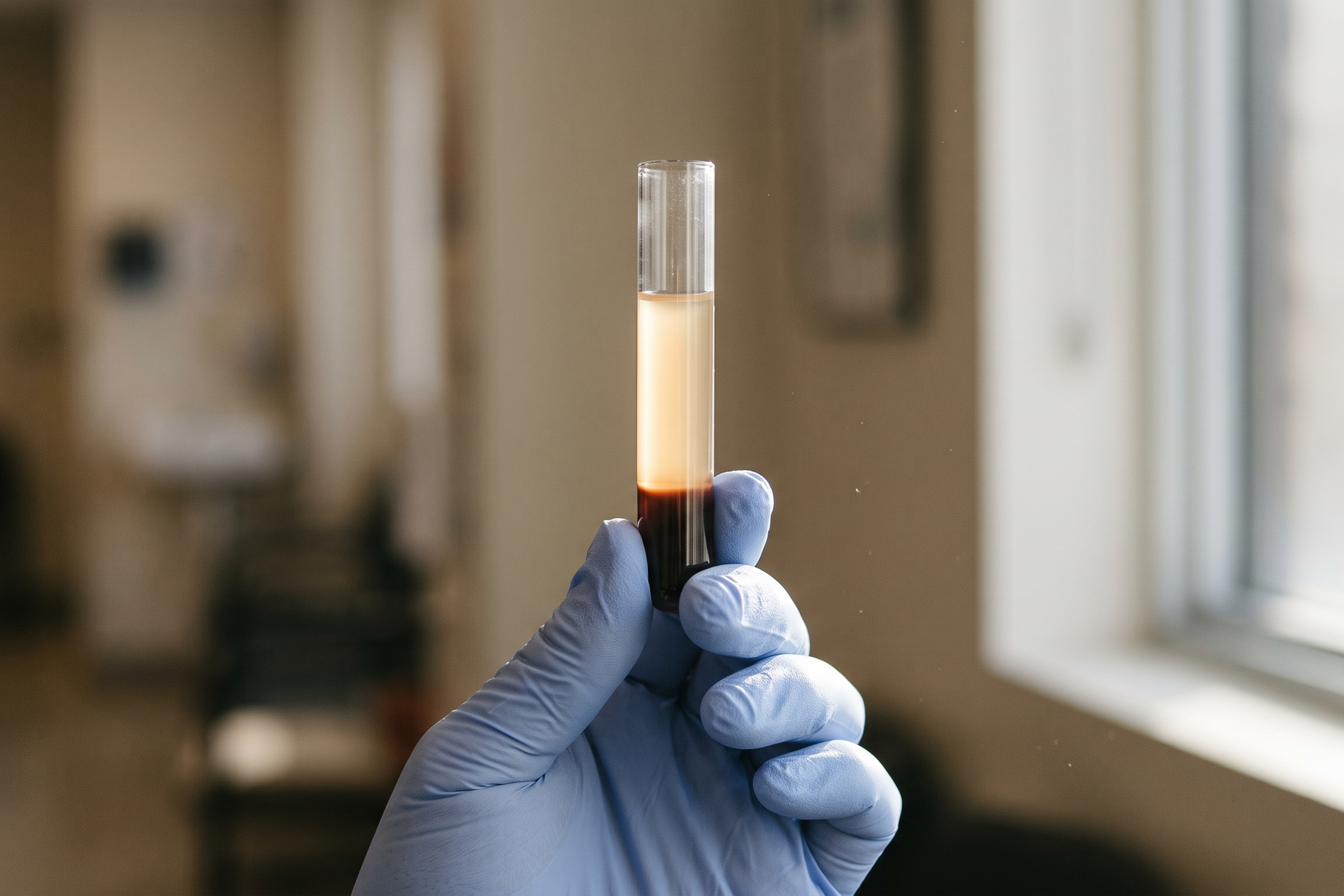
PRF and PRP both come from your own blood. The difference is 1 spin instead of 2, and no anticoagulant, which lets PRF form a fibrin scaffold that releases growth factors over about 10 days rather than within the first hour.
That is the mechanism, and it is well documented. Whether it produces a better result on your face is a separate question, and the honest answer is that the evidence does not yet show it does.
What is the fibrin scaffold?
When blood is drawn for PRP, an anticoagulant goes into the tube to stop it clotting. That keeps the plasma liquid so it can be spun hard, twice, and concentrated.
PRF skips the anticoagulant. Without it, fibrinogen in the plasma starts polymerising during the spin, forming a three-dimensional fibrin mesh. The platelets and growth factors get caught inside that mesh rather than floating free.
The spin is also gentler. Standard leukocyte-rich PRF is spun at around 708 g for 12 minutes, advanced protocols run at 208 g, and the injectable form used in aesthetics is spun at roughly 60 g for three minutes. PRP by comparison is typically double-spun at much higher force.
Lower force leaves a looser, more porous fibrin network. Higher force makes it dense. That architecture is what governs how quickly the growth factors get out.
How does the release differ in practice?
This is the best-evidenced part of the whole comparison, and it has been measured three separate times by different groups.
The reference study sampled growth factor release at 15 minutes, one hour, 8 hours, one day, three days and 10 days. Its conclusion was that PRP is suited to fast delivery of growth factors while advanced PRF is better suited to long-term release. A second group measuring at 6, 24, 48 and 72 hours plus 7 and 10 days found that lowering the spin force significantly increased release, with the gentlest protocol giving the highest accumulated VEGF by day 10.
For contrast, with PRP at least 95 percent of growth factors are released within the first hour.
One correction to the usual marketing story: PRF is not simply more. In a direct comparison, injectable PRF was higher at 10 days for several growth factors, but PRP was higher for TGF-beta 1 and VEGF at the same timepoint. The accurate phrase is a different release profile, not a bigger one.
Note also that 10 days is where the measuring stopped, not where release stops. Any claim about a specific longer duration is going past the data.
Is PRF leukocyte-rich, and does that matter?
Usually yes to the first, and unresolved to the second.
PRF typically retains more white blood cells than the leukocyte-poor PRP most used in dermatology. Leukocytes are implicated in wound healing and antimicrobial defence, which is the argument for keeping them.
But it is not that tidy. Leukocyte-rich PRP exists, and some commercial PRF systems are leukocyte-depleted by around 95 percent. Reviewers describe the benefit of high-leukocyte preparations as controversial, since the same cells are pro-inflammatory. One head-to-head measurement found PRF had the lowest platelet count of the three preparations tested, yet the highest TGF-beta 1, which fits the idea that the fibrin matrix concentrates and holds growth factors rather than simply carrying more of them.
Is PRF approved in Canada?
No, and Health Canada named it specifically. The July 2019 position statement covers platelet-rich plasma treatments including platelet-rich fibrin treatments, and confirms that Health Canada has received no application to market these products or run trials on them, and has therefore not reviewed their safety, effectiveness or quality.
As with PRP, an autologous point-of-care preparation is treated as the practice of medicine and regulated provincially. And as with PRP, no clinic can describe PRF as Health Canada approved.
What does a course look like?
Published aesthetic protocols run one to four sessions, most commonly three to four about a month apart, with 0.5 to 3 millilitres per session. Only the injectable liquid form can be used this way, since solid PRF is a membrane rather than something you can put through a needle.
Improvement is reported within one to three months. The systematic reviewers flag a caveat worth repeating: early visible change, especially under the eye, may be transient swelling rather than tissue change.
Does PRF last longer than PRP?
Longevity was the reason PRF was developed, and it is the claim you will see most often. It is also the claim with the least support.
The only systematic review comparing PRP and PRF for periorbital rejuvenation states that current evidence does not support the superiority of one over the other, and that it is unknown whether PRF achieves the longer duration it was designed for, because nobody has observed it long enough.
In the trial that ran longest, PRF showed significant superiority over PRP for canthal smoothness and wrinkle reduction at three months. By six months, that advantage had disappeared. PRF itself is resorbed by the body within about two weeks.
When is PRP the better choice?
Here is the finding that runs opposite to most clinic marketing: for pigmentation and dark circles, the evidence favours PRP, not PRF. One study reported a 46.6 percent mean reduction in melanin area after four PRP sessions, with dark-circle improvement sustained at six months.
So the reasonable split, on current evidence, is PRF for texture, fine lines and crepiness in the short term, PRP for pigmentation and under-eye colour. If you want the full month-by-month picture on the PRP side, that is covered in our guide to a full PRP course.
How good is the evidence overall?
Weak, and mostly borrowed. Most PRF science comes from periodontal and oral surgery, and the foundational release-kinetics papers are all in dentistry journals. The mechanism is solid. The aesthetic outcome data is small, short, and inconsistent, with only two studies using objective assessment and no uniformity in centrifugation protocols between them.
Write that down as the fair summary: confident about the mechanism, cautious about the outcome.
What are the risks?
Swelling, redness and bruising, transient, generally resolving within a day to the end of the treatment course. Adverse event frequency did not differ between PRF and PRP patients.
The serious risk is vascular. Case reports document four patients irreversibly blinded after facial platelet injections, three of them in the glabella, caused by material travelling backwards into the ophthalmic circulation. This applies to any facial injectable and is the single strongest argument for choosing a medically supervised clinic.
PRF is avoided in critical thrombocytopenia, platelet dysfunction, haemodynamic instability, sepsis and local infection, with caution around recent anti-inflammatory use, recent corticosteroid injection, fever, malignancy, anaemia and smoking.
In Quebec, an in-person medical assessment is required first, delegation to a nurse requires an individual prescription, and a physician must remain accessible to manage a reaction. If skin texture is your main concern, it is worth comparing this against microneedling and the rest of the treatment range rather than assuming a blood-derived treatment is automatically the gentler option.
Results vary from person to person and are not guaranteed. Nothing here is medical advice — book a consultation and we will look at your case.
Sources
- https://recalls-rappels.canada.ca/en/alert-recall/health-canada-clarifies-position-platelet-rich-plasma-treatments
- https://link.springer.com/article/10.1007/s00784-016-1719-1
- https://link.springer.com/article/10.1007/s00068-017-0785-7
- https://link.springer.com/article/10.1007/s00784-017-2063-9
- https://pmc.ncbi.nlm.nih.gov/articles/PMC12587466/
- https://www.mdpi.com/2227-9059/12/1/7
- https://www.mdpi.com/1648-9144/61/1/84
- https://link.springer.com/article/10.1186/s12891-025-09346-9
- https://pmc.ncbi.nlm.nih.gov/articles/PMC7722697/
- https://cms.cmq.org/files/documents/Guides/p-1-2020-08-24-fr-guide-medecine-esthetique.pdf
Keep reading
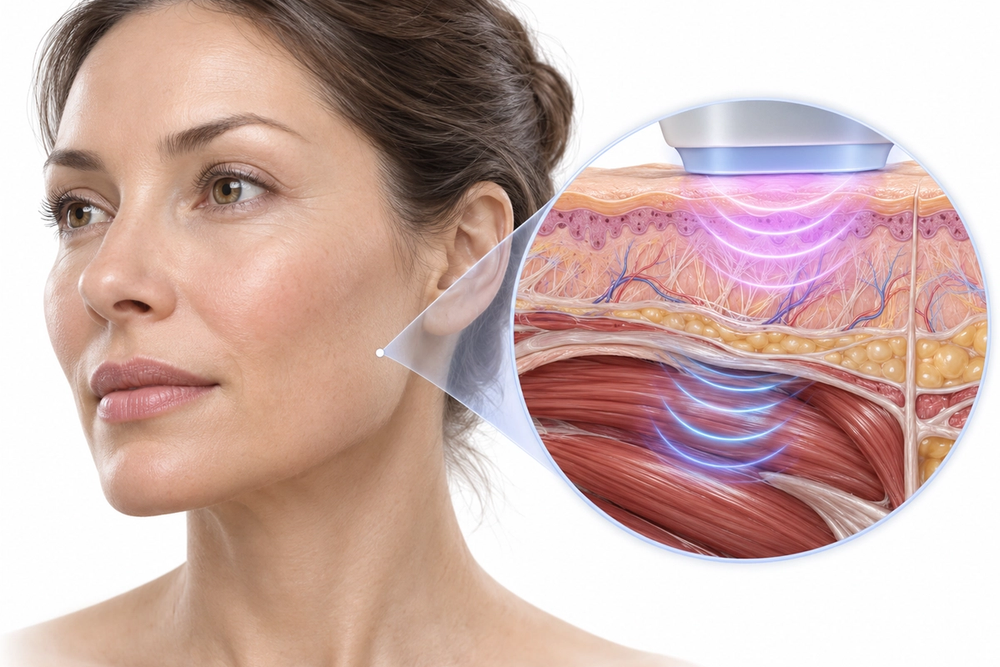
Can TriLift Tighten Your Face Without Surgery in Montreal?
TriLift combines facial muscle stimulation and radiofrequency to improve the appearance of facial tone and firmness. See how sessions, pricing, results and recovery work.
Read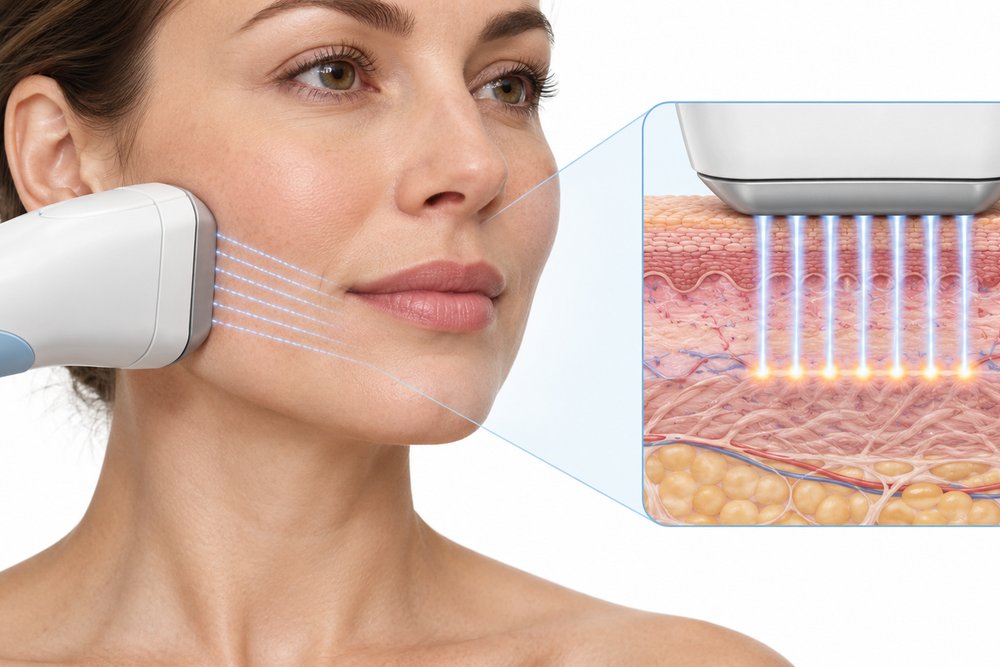
Does Sofwave tighten the face and neck without surgery?
Sofwave can improve mild facial and neck skin laxity without surgery. See how ultrasound treatment works, when results appear, what recovery involves, and Montreal prices.
Read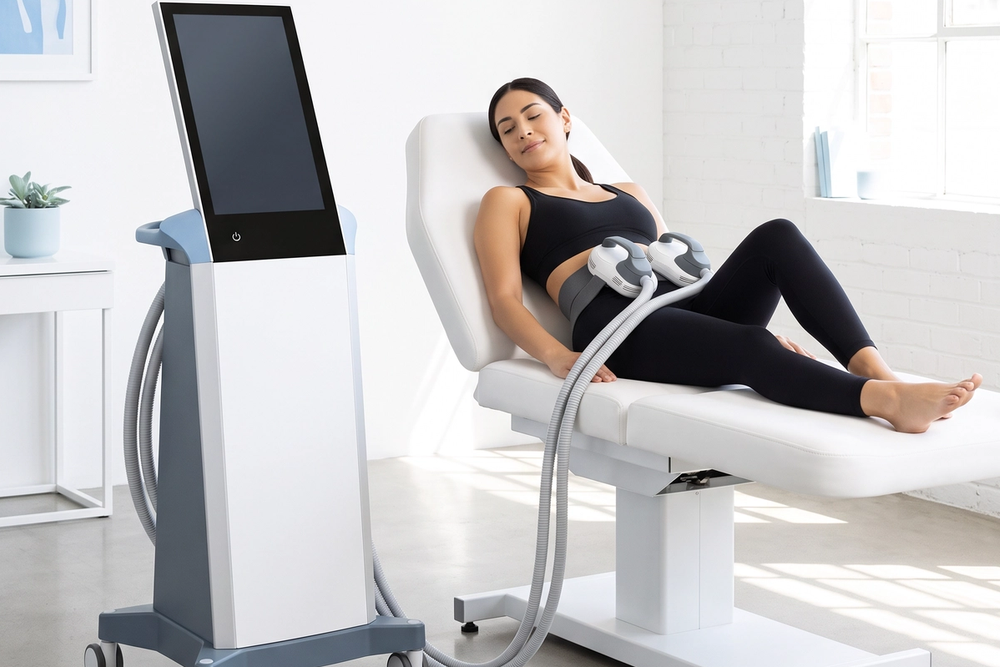
Body Contouring Compared: EMSCULPT NEO, CoolSculpting and Venus Bliss MAX
EMSCULPT NEO, CoolSculpting and Venus Bliss MAX reduce fat by three different mechanisms, and only two of them build muscle. Here is what each one does, which areas it treats, how many sessions to expect and how they combine.
Read