Blog
2026 · 8 min read
Jawline and Nose: What a Wrinkle Relaxer Can and Cannot Reshape
Searches for nose slimming injections and a diamond jawline usually lead to the same product: a neuromodulator. Here is what it changes at the masseter, the nose and the chin, what it leaves untouched, and how it compares with filler and threads.

Key facts
- A wrinkle relaxer works only on muscle. It can slim a jaw that is wide because of an enlarged masseter, but it cannot narrow bone or reduce a hump on the nose.
- At the nose it can lift a tip that drops when you smile and soften bunny lines on the sides of the bridge. A change in the bone or cartilage needs filler, threads or surgery.
- Masseter treatment is also studied for teeth grinding, and many people report less jaw tension as a secondary benefit. The dose comes from the assessment, not a package.
- Results appear over days, reach full effect at about two weeks and last a few months. Jaw slimming builds more gradually than a smoothing effect on expression lines.
- Asymmetry, chewing fatigue and a change in the smile are the risks specific to these areas. Careful mapping of the muscle and a follow-up visit are the safeguards.
Searches for "nose slimming injections", "diamond jawline" and "masseter" treatments have grown quickly, and most of them lead to the same product: a neuromodulator, also called a wrinkle relaxer. The name is misleading for this use, because the aim is not to smooth a line but to change the shape of the lower face or the position of the nose tip by relaxing one specific muscle.
That distinction matters. A neuromodulator acts only on muscle, so it produces a real change where a muscle sets the shape and no change where bone, cartilage or fat sets it. This guide covers each site in turn, then the dose, timing, risks and alternatives.
What does a wrinkle relaxer actually do to a muscle?
A neuromodulator is a purified protein, botulinum toxin type A, that blocks the signal between a nerve ending and the muscle it controls. The muscle still exists, but it contracts less for a period of weeks to months until the signal returns.
When the target is a large chewing muscle such as the masseter, a muscle that is used less for several months gradually loses bulk, as any muscle does when it stops training. That is the mechanism behind jaw slimming, and it is why the change is gradual rather than immediate.
The products used in Canada are prescription drugs listed in the Health Canada Drug Product Database, administered here after a consultation and medical assessment with a physician. The general overview is on our page for wrinkle relaxer treatments in Montreal; this article deals only with the jaw, nose and chin.
Can a wrinkle relaxer slim the jawline?
It can, when the width of the lower face comes from the masseter, the thick muscle at the angle of the jaw that you can feel when you clench. In some people it is enlarged from years of clenching or grinding, and the outline of the muscle itself gives the lower face a square shape. Relaxing it reduces its activity, and over the following weeks it thins, which narrows the angle of the jaw and gives the face a more tapered, "V" or so-called diamond outline.
A Cochrane review examined botulinum toxin type A for masseter hypertrophy, and a 2022 systematic review found consistent reductions in muscle thickness on ultrasound and in visible width, with effects lasting several months.
The limit is as important as the effect. Where the width comes from the bone of the jaw angle, from fat under the chin or from skin laxity, relaxing the masseter changes very little. The assessment compares the relaxed and clenched outline to judge how much of the shape is muscle and therefore how much this treatment can move.
Does treating the masseter help with teeth grinding?
Many people who come in for jaw slimming also grind or clench, and the grinding is often what built the muscle. A 2023 systematic review and meta-analysis of randomized trials found that botulinum toxin type A reduced bruxism-related pain and the frequency of grinding episodes compared with placebo, while noting that the studies were small.
In an aesthetic clinic the treatment is planned for the shape of the jaw, and less jaw tension or fewer morning headaches is a benefit that patients frequently report rather than the purpose of the visit.
Can an injection slim the nose?
A neuromodulator cannot slim the nose. The width of the nose, a hump on the bridge and the size of the nostrils are set by bone, cartilage and skin, and no muscle relaxation changes any of them.
What it can do at the nose is narrower. A small muscle called the depressor septi nasi runs from the upper lip to the base of the nose and pulls the tip downward when you smile or speak. Relaxing it lets the tip sit slightly higher and stops that downward movement, which the plastic surgery literature describes as treatment of dynamic nasal tip ptosis. The change is a few degrees of tip angle, most noticeable in movement.
The second use is the bunny lines, the diagonal creases on the sides of the upper nose that appear when you scrunch it. These come from the nasalis muscle, and a small treatment there smooths them. Neither use changes the bridge, the width or the profile.
What can it do at the chin?
The mentalis is the muscle in the centre of the chin. When it is overactive it pulls the chin skin upward and inward, producing a dimpled, "pebble" or orange-peel texture at rest and a deep crease under the lower lip. Relaxing the mentalis smooths the surface, and it is one of the more reliable lower-face uses of the treatment.
A chin that is short or recessed is a matter of bone and soft tissue, and relaxing the mentalis will not lengthen or project it; hyaluronic acid filler is the usual route for that.
What is the Nefertiti lower-face approach?
The so-called Nefertiti lift, described in the literature in 2007, is a pattern of small injections along the lower border of the jaw and into the upper part of the platysma, the sheet-like muscle of the neck. The platysma pulls the jawline downward. Relaxing its upper edge lets the muscles that lift the face work unopposed, so the jawline reads as slightly sharper and the vertical bands of the neck soften.
The effect is subtle. It sharpens the line between the face and the neck; it does not lift loose skin, and it suits earlier changes better than advanced laxity.
Who suits these treatments, and how is the dose decided?
The common thread is that a muscle must be responsible for the shape. Masseter treatment suits a lower face whose width changes visibly between the relaxed and clenched state. The nose tip treatment suits a tip that visibly drops in movement. The chin treatment suits a texture that appears when the muscle is active.
The dose comes from the assessment, not a package. The masseter varies a great deal in size from one person to another and often between the two sides of the same face, so the injection points are mapped to the bulk of the muscle while avoiding the muscles that pull the smile outward. A first session for the jaw is usually planned on the conservative side, with a review at two weeks to adjust for symmetry. Pregnancy and breastfeeding are contraindications, and any neuromuscular condition or swallowing difficulty needs to be raised at the consultation.
When do results appear, and how long do they last?
The first change is usually felt before it is seen: the muscle feels weaker on clenching within about three to seven days, and the full relaxing effect is reached at about two weeks.
For the jaw, the timeline is longer because the slimming depends on the muscle losing bulk. The narrowing is noticeable at about four to six weeks and continues over two to three months. The relaxing effect then wears off over the following months, and the muscle slowly returns toward its previous size as it is used again. Repeat sessions are planned as the effect fades, and the review visit decides the timing, not a fixed schedule.
What are the risks?
The general effects are the same as for any injection: a small bruise, mild swelling or tenderness for a day or two, and occasionally a headache.
Asymmetry is the most common. The two masseters are rarely identical and one side can slim more than the other; the two-week review exists mainly to correct this.
Chewing fatigue affects some people in the first weeks of a masseter treatment. Tougher foods can feel tiring to chew, and this settles as the body adapts. It is a reason the dose is kept conservative.
A change in the smile is possible when product spreads into the muscles that lift the corner of the mouth, just in front of the masseter. It shows as a smile that feels stiff or uneven on one side and resolves as the effect wears off. Accurate mapping of the injection points is the safeguard.
How does it compare with filler and thread lifts for the jaw and nose?
A neuromodulator reduces a muscle. It slims a jaw that is wide because of the masseter, lifts a drooping nose tip and smooths a dimpled chin. It cannot add definition where there is none and it cannot change bone or cartilage.
Hyaluronic acid filler adds structure. Along the jawline it can sharpen the angle, straighten the line toward the chin and build projection. At the nose it can raise the bridge or camouflage a small hump by filling above and below it, which straightens the profile without making the nose narrower. The areas we treat are listed on our page for hyaluronic acid fillers in Montreal.
PDO threads reposition tissue. At the nose, threads placed along the bridge and into the tip give a modest lift and a straighter line without filler volume. Along the jaw, threads lift mild sagging rather than slimming muscle. Our page on PDO thread lifts in Montreal explains where they are used.
Pricing follows the plan set at the consultation; the current range is listed on the treatment page.
What is the first step?
Book an assessment at one of our three clinics in the Montreal area. Bring any photographs of the change you have in mind, and be ready to describe when the shape bothers you most: at rest, when you smile or when you clench.
You can browse all of our aesthetic treatments to see how wrinkle relaxer treatments fit alongside the other options for the jawline, chin and nose.
Results vary from person to person and are not guaranteed. Nothing here is medical advice — book a consultation and we will look at your case.
Sources
- https://idealbodyclinic.com/botox-montreal/
- https://health-products.canada.ca/dpd-bdpp/
- https://www.cmq.org/fr/actualites/medecin-publicite-declarations-publiques
- https://pubmed.ncbi.nlm.nih.gov/24018587/
- https://pubmed.ncbi.nlm.nih.gov/34620536/
- https://pubmed.ncbi.nlm.nih.gov/15861102/
- https://pubmed.ncbi.nlm.nih.gov/36694050/
Keep reading
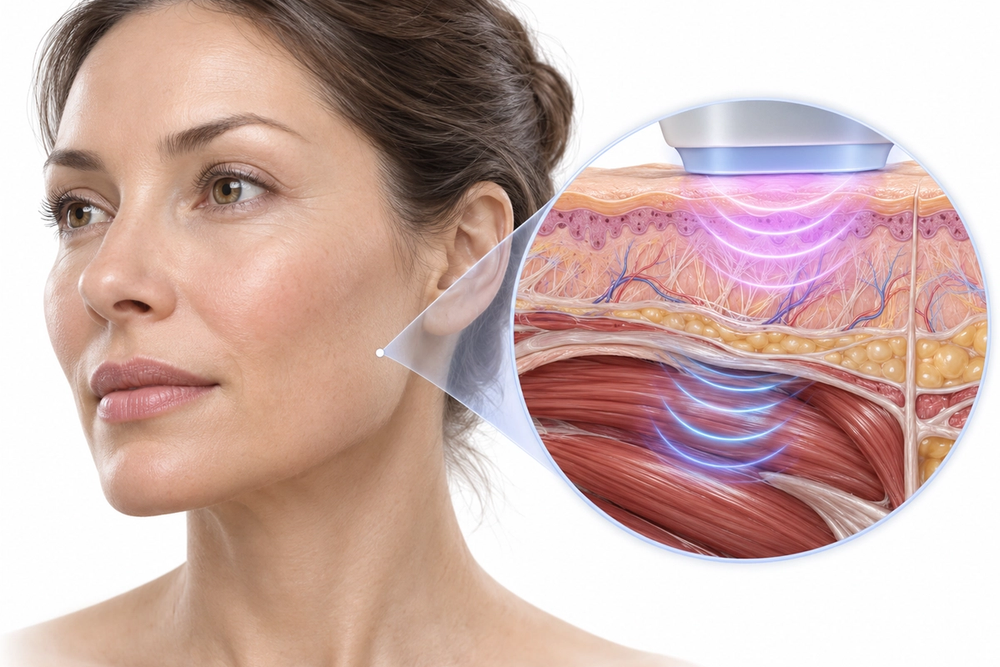
Can TriLift Tighten Your Face Without Surgery in Montreal?
TriLift combines facial muscle stimulation and radiofrequency to improve the appearance of facial tone and firmness. See how sessions, pricing, results and recovery work.
Read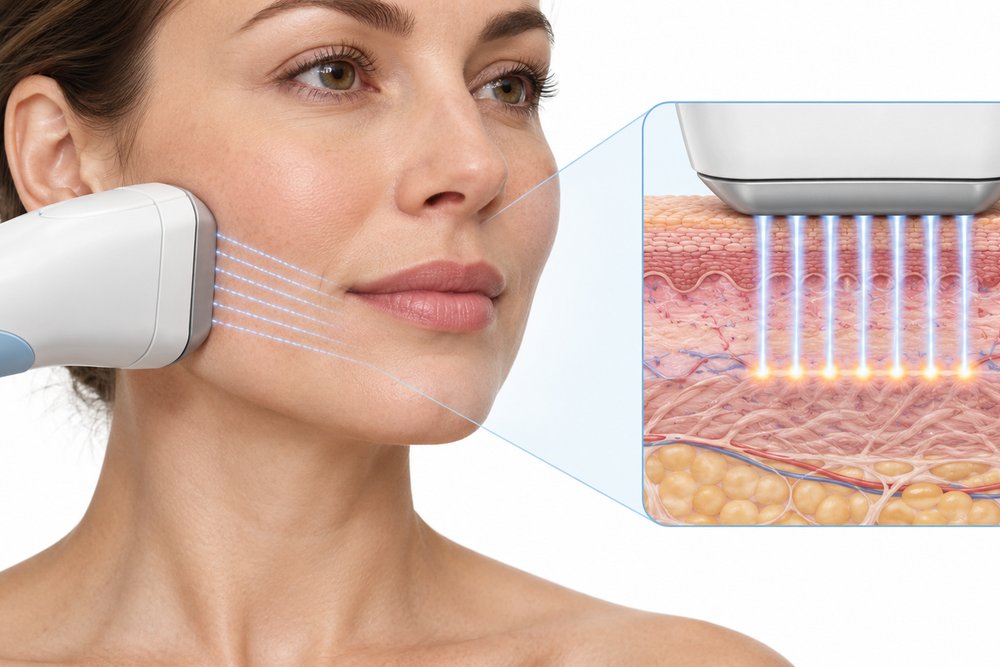
Does Sofwave tighten the face and neck without surgery?
Sofwave can improve mild facial and neck skin laxity without surgery. See how ultrasound treatment works, when results appear, what recovery involves, and Montreal prices.
Read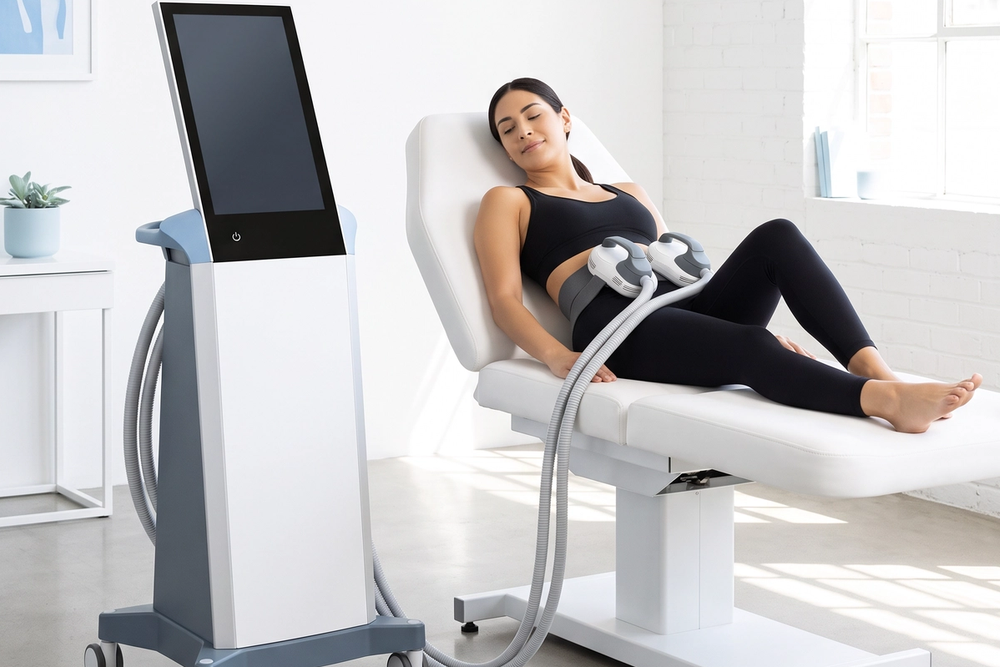
Body Contouring Compared: EMSCULPT NEO, CoolSculpting and Venus Bliss MAX
EMSCULPT NEO, CoolSculpting and Venus Bliss MAX reduce fat by three different mechanisms, and only two of them build muscle. Here is what each one does, which areas it treats, how many sessions to expect and how they combine.
Read