Blog
2026 · 10 min read
Botox vs. Dermal Fillers: What Is the Difference?
Botox relaxes facial muscles to soften expression lines, while dermal fillers restore volume and enhance contours. Compare results, longevity, prices, and treatment options.
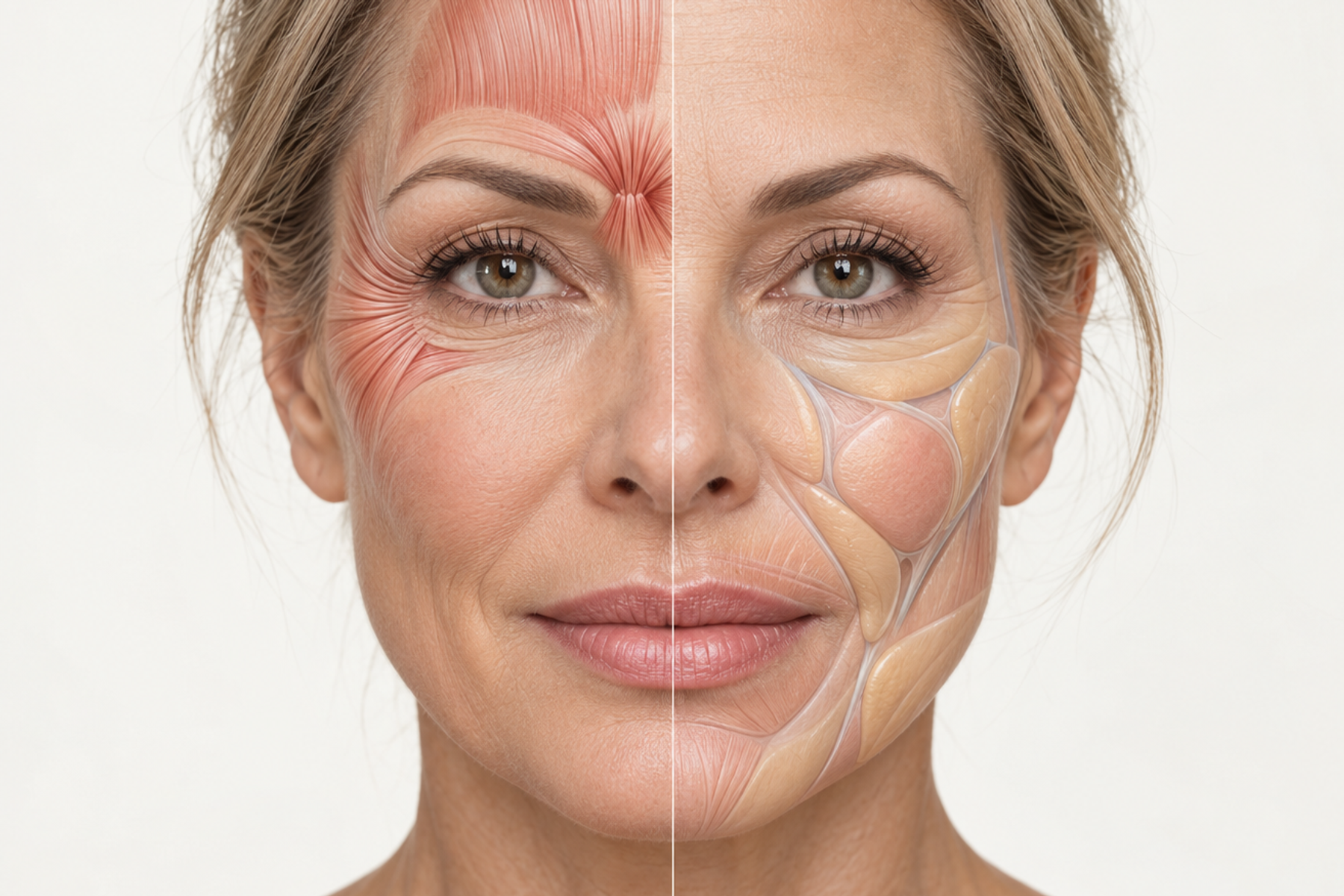
Key facts
- Botox temporarily relaxes selected facial muscles, while dermal fillers restore volume or support facial contours.
- Botox Cosmetic effects generally last 3 to 4 months, according to Health Canada.
- Botox and dermal fillers can be combined for selected patients following an individualized medical assessment.
Botox and dermal fillers are 2 different injectable treatments. Botox temporarily relaxes muscles that cause expression wrinkles, while dermal fillers add volume, soften folds, and enhance facial contours. Botox generally lasts 3 to 4 months, while hyaluronic acid fillers often last 6 to 12 months or longer.
The right option depends on whether your main concern is facial movement, volume loss, or a combination of both.
What is the main difference between Botox and dermal fillers?
Both treatments are used in aesthetic medicine, but they work in different ways.
Botox is a neuromodulator made from purified botulinum toxin type A. It acts on selected muscles to temporarily reduce the contractions responsible for expression wrinkles.
Dermal fillers are injectable materials placed beneath the skin to restore volume, support facial contours, or soften certain folds. Hyaluronic acid is the most commonly used filler material in Canada.
For example, someone concerned about forehead wrinkles that appear when raising their eyebrows may benefit from Botox. Someone concerned about lips that have lost volume may be better suited to a hyaluronic acid filler.
This difference is important because a treatment that addresses muscle movement cannot necessarily correct lost facial volume.
You can explore our Botox injections in Montreal to understand how neuromodulators are used in a personalized treatment plan.
What areas can Botox and dermal fillers treat?
The areas commonly considered for each treatment are different, although certain facial concerns may benefit from both approaches.
Facial concern
Botox
Dermal fillers
Forehead expression lines
Common option
Not usually first choice
Frown lines between eyebrows
Common option
Generally not first choice
Crow's feet around the eyes
Common option
Selected cases require careful assessment
Thin lips or lost lip volume
Does not add volume
Common option
Lost cheek volume
Does not restore volume
Common option
Nasolabial folds
Limited role
May help selected patients
Marionette lines
Sometimes supportive
May help selected patients
Chin or jawline definition
Selected muscle-related concerns
May enhance structural contours
These examples are general, not a treatment recommendation. The appropriate product and injection site depend on the patient's anatomy and the product's authorized indications.
How does Botox work on wrinkles?
Every time you smile, frown, squint, or raise your eyebrows, facial muscles contract and move the skin above them.
Over time, repetitive facial movement contributes to the development of expression lines.
Botox reduces activity in specifically targeted muscles by temporarily interrupting nerve signals that cause muscle contraction.
The goal is to soften selected wrinkles while maintaining facial expression appropriate to the patient's preferences and anatomy.
Botox is most closely associated with treating:
Horizontal forehead lines.
Frown lines between the eyebrows.
Crow's feet around the eyes.
Botox does not replace lost cheek volume or physically fill deep facial folds.
Results generally appear gradually after injection. The full response should be assessed according to the specific product and treatment plan.
For patients whose primary concern is facial expression lines, wrinkle relaxer treatments may be considered following a medical evaluation.
How do dermal fillers restore facial volume?
Facial appearance changes with age because of changes involving skin, facial fat, bone, and supporting tissues.
These changes can affect facial contours and make certain areas appear less full.
Dermal fillers provide volume or structural support in carefully selected areas. Hyaluronic acid fillers are commonly used because hyaluronic acid forms a gel that can hold water and provide a filling effect.
Depending on the product and clinical assessment, fillers may be considered for:
Enhancing lip volume and shape.
Restoring certain areas of cheek fullness.
Softening selected facial folds.
Improving chin projection.
Refining parts of the jawline.
Not every patient needs additional volume. Sometimes the concern involves skin laxity, facial movement, or skin texture rather than volume loss.
For this reason, more filler is not necessarily better. Appropriate product selection, placement, and quantity are essential.
At Ideal Body Clinic, patients can discuss hyaluronic acid dermal fillers in Montreal as part of a personalized facial assessment.
How long do Botox and dermal fillers last?
Neither Botox nor most hyaluronic acid fillers is permanent.
According to Health Canada, Botox Cosmetic effects generally last approximately 3 to 4 months.
Hyaluronic acid dermal fillers commonly last 6 months to 1 year or longer, depending on the formulation, area treated, and individual factors.
Treatment
Typical duration
Botox Cosmetic
3–4 months
Hyaluronic acid dermal fillers
6–12 months or longer
Duration is not the same as the time needed for a treatment to become visible.
Botox works gradually after injection. Hyaluronic acid filler produces an initial filling effect, but swelling may temporarily affect the appearance immediately after treatment.
Maintenance needs should be discussed individually. A fixed schedule is not necessary for every patient, and treatments should not be repeated automatically without reassessment.
Is Botox or filler better for looking natural?
Neither product automatically creates a more natural-looking result.
The outcome depends on facial anatomy, the reason for treatment, the amount used, injection placement, and the practitioner's technique.
An individualized treatment plan should account for how the face looks both at rest and during expression.
For example, relaxing certain forehead muscles too much may affect eyebrow position. Adding more filler than the facial anatomy requires may create unwanted fullness.
Aesthetic assessment should focus on the whole face rather than treating each wrinkle or contour independently.
The objective is not necessarily to eliminate every line. It is to understand which facial features the patient wishes to address and select a proportionate approach.
Can Botox and dermal fillers be used together?
Yes. Botox and fillers may be combined in appropriate patients because they address different factors affecting facial appearance.
For example, a patient may have forehead expression lines and reduced cheek fullness. Botox may be considered for the expression lines, while fillers may be considered for the volume concern.
Published clinical consensus recommendations support individualized combination planning. However, whether treatments should occur during the same appointment or be separated depends on the products, clinical assessment, and practitioner's judgment.
Combination treatment is not required for everyone.
Other concerns, such as skin texture or laxity, may call for a different approach. Patients interested in firmness rather than volume may also wish to discuss Sofwave skin tightening, which is a separate treatment category.
How much do Botox and dermal fillers cost in Montreal?
Botox is generally priced according to the number of units administered, while hyaluronic acid filler pricing is usually based on the amount and type of product.
At Ideal Body Clinic, regular reference prices include:
Treatment
Regular price
Botulinum toxin
$12 per unit
Hyaluronic acid filler, 0.5 mL
$289
Hyaluronic acid filler, 1 mL
$450
Hyaluronic acid filler, 2 mL
$800
Prices are in Canadian dollars, before applicable taxes, and may change. Consultation fees may apply.
The total cost of Botox depends on the units clinically appropriate for the targeted muscles. The total cost of fillers depends on the product, treatment area, and volume recommended.
A lower initial treatment price does not necessarily mean a lower long-term cost because the two products have different uses and maintenance needs.
Patients can also review current aesthetic treatment promotions before scheduling a consultation.
Are Botox and dermal fillers safe?
Both treatments involve medical injections and carry potential risks.
Common injection-related reactions can include redness, swelling, tenderness, or bruising.
Botox may also cause unwanted muscle weakness or eyelid or brow drooping. Rare serious reactions involving swallowing, speaking, or breathing difficulties require immediate medical attention.
Dermal filler risks include infection, lumps, inflammatory reactions, and vascular complications.
One of the most serious filler complications occurs when material unintentionally enters a blood vessel. This can cause tissue injury and, in rare cases, blindness or stroke.
Severe or unusual pain, skin turning pale or dusky, or vision changes after filler injections require immediate emergency assessment.
Certain conditions, including active infection at the injection site, product hypersensitivity, or relevant medical conditions, may mean treatment must be postponed or avoided.
Patients who are pregnant, breastfeeding, taking medication, or managing an underlying medical condition should disclose this during their consultation.
Health Canada recommends that cosmetic injections be performed by appropriately qualified healthcare professionals who understand the products and their possible complications.
Should I choose Botox or fillers for my first treatment?
The best starting point is identifying what you would like to change.
If the concern is a wrinkle that appears mainly when you move your face, Botox may be more relevant.
If the concern is diminished facial volume, lip shape, or a structural contour, dermal filler may be more appropriate.
Some patients benefit from a combination. Others may not need either treatment.
During a consultation, the practitioner can evaluate facial movement, symmetry, anatomy, previous treatments, medical history, and personal goals.
At Ideal Body Clinic, injectable consultations and treatments are available through our medical aesthetics services in Montreal and Châteauguay.
A personalized plan may recommend one treatment, a gradual approach, or no injection where the anticipated benefit does not justify the risk.
Which injectable treatment is right for you?
Botox and dermal fillers are not interchangeable. One temporarily reduces selected muscle activity, while the other adds volume or support to specific areas.
Understanding that difference helps you ask better questions and make an informed decision.
Whether your goal involves expression lines, facial contours, or several concerns together, the right plan begins with a clinical assessment and realistic expectations.
Results vary from person to person.
Results vary from person to person and are not guaranteed. Nothing here is medical advice — book a consultation and we will look at your case.
Keep reading
How Can You Improve Neck Wrinkles and a Double Chin?
Neck wrinkles, sagging skin and a double chin can improve with treatments targeting collagen, skin laxity or excess fat. Discover which options work for each concern in Montreal.
Read
Can TriLift Facial Muscle Stimulation Lift Your Face?
TriLift uses facial muscle stimulation and radiofrequency to improve the appearance of facial contours. Discover how it works, which areas it targets, and what results to expect.
Read
Jawline and Nose: What a Wrinkle Relaxer Can and Cannot Reshape
Searches for nose slimming injections and a diamond jawline usually lead to the same product: a neuromodulator. Here is what it changes at the masseter, the nose and the chin, what it leaves untouched, and how it compares with filler and threads.
Read