Blog
2026 · 7 min read
Where Can Botulinum Toxin Be Injected and What Can It Treat?
Botulinum toxin can target facial muscles for expression lines and selected medical conditions such as chronic migraine and underarm sweating. Here is where and why it is injected.
Key facts
- The chronic migraine indication applies to adults with at least 15 headache days per month, with headaches lasting 4 hours a day or longer.
- Botox is approved for primary underarm hyperhidrosis in adults age 18 and older.
- In Quebec, medico-aesthetic treatment requires medical assessment and a personalized treatment plan before treatment is provided.
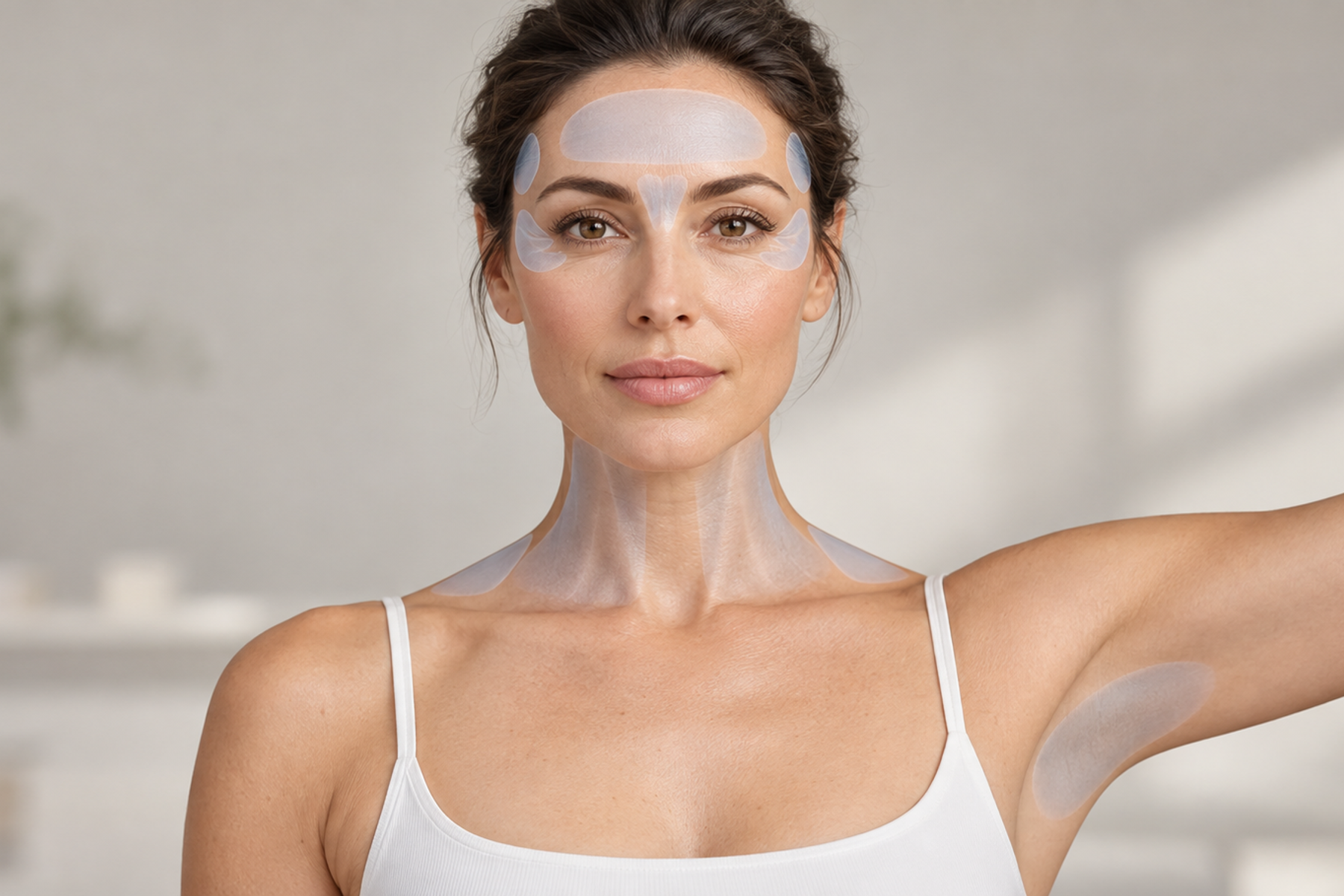
In Canada, Botox Cosmetic has 4 approved cosmetic treatment areas: forehead lines, glabellar frown lines, crow’s feet and platysma prominence. Therapeutic Botox is also approved for chronic migraine and excessive underarm sweating, among several other medical conditions.
The right injection area depends on your anatomy, the condition being treated, the specific botulinum toxin product and a medical assessment. Botulinum toxin is not one standard pattern placed in the same spots for everyone.
What does botulinum toxin do?
Botulinum toxin type A temporarily reduces nerve signaling to a targeted muscle or gland. In cosmetic treatment, that can soften lines caused by repeated muscle movement. In the underarms, it can reduce signaling to sweat glands. For chronic migraine, onabotulinumtoxinA is used according to a medical injection pattern across specific head and neck muscles.
Botox and Botox Cosmetic are brand names for onabotulinumtoxinA. Other botulinum toxin products are not directly interchangeable unit for unit, so the product and treatment plan matter.
If your main concern is expression lines, our Botox treatment in Montreal page explains how we approach cosmetic consultation and treatment.
Where can Botox Cosmetic be injected for wrinkles?
Health Canada’s current Botox Cosmetic monograph lists upper facial lines in three areas plus platysma prominence in adults.
Can it be used between the eyebrows?
Yes. The glabellar area is the region between the eyebrows where vertical “11” lines can appear when you frown. Botox Cosmetic is authorized for glabellar lines.
Can it be used on forehead lines?
Yes. Horizontal forehead lines are an approved cosmetic indication. The frontalis muscle lifts the brows, so treatment has to be planned around the person’s brow position, muscle strength and facial movement rather than simply treating every visible line.
Can it be used for crow’s feet?
Yes. Lateral canthal lines, commonly called crow’s feet, are another approved area. These lines appear at the outer corners of the eyes and become more visible with smiling or squinting.
Can it be used along the neck and jawline?
Health Canada also authorizes Botox Cosmetic for improvement in the appearance of platysma prominence in adults. The platysma is a thin superficial muscle that extends through the neck toward the lower face. In selected patients, treatment can be directed to visible platysmal bands and the upper platysma below the jawline.
This is different from adding volume. If the concern is facial volume loss, structure or lip shape, hyaluronic acid fillers may address a different part of the treatment plan.
What about masseter injections or a gummy smile?
Some botulinum toxin uses are off-label. Health Canada defines off-label use as using a drug in a way that is not covered by its marketing authorization. A healthcare professional may recommend an off-label use based on clinical judgment and within provincial professional rules.
Two examples discussed in aesthetic medicine are masseter treatment for prominent masseter muscles and treatment of excessive gingival display, often called a gummy smile. Recent randomized evidence and systematic reviews report improvement in masseter prominence with botulinum toxin type A, while systematic reviews have also found reductions in excessive gingival display after targeted injections.
These uses should not be presented as if they were part of the current Canadian Botox Cosmetic label. The anatomy, potential benefit and risks need to be assessed individually.
Can Botox be used for headaches?
Botox is approved in Canada for prevention of headaches in adults with chronic migraine. This does not mean every headache qualifies. The Canadian product monograph defines the indication as chronic migraine with at least 15 headache days per month, with headaches lasting 4 hours a day or longer.
The chronic migraine protocol is very different from cosmetic injections. The Canadian monograph describes injections across 7 specific head and neck muscle areas, including the forehead, temples, back of the head, upper neck and trapezius. The standard protocol includes 31 injection sites, with retreatment generally scheduled every 12 weeks.
Clinical trials in the PREEMPT program found that onabotulinumtoxinA reduced headache days compared with placebo in adults with chronic migraine. Treatment is preventive. It is not the same as using botulinum toxin for an occasional headache or a headache that has not been medically assessed.
Can Botox be used for excessive sweating?
Yes, for a specific indication. Therapeutic Botox is approved in Canada for primary hyperhidrosis of the axillae, meaning excessive underarm sweating, in adults age 18 and older.
For this indication, Botox is injected into the skin across the area of excessive sweating rather than into facial muscles. The product monograph describes multiple small intradermal injection points distributed throughout the affected underarm area.
Clinical studies have shown meaningful reductions in underarm sweat production after treatment, but response and duration vary by patient. The Canadian monograph reports that treatment response has been observed to persist for approximately 4 to 7 months in studied patients.
Sweating of the palms, feet or other body areas is not the same approved Canadian indication as axillary hyperhidrosis. Those concerns require an individual medical discussion.
How is a cosmetic injection plan decided in Quebec?
In Quebec, medical aesthetics remains medical care. The Collège des médecins du Québec states that patients seeking medico-aesthetic treatment should receive an appropriate medical assessment leading to a diagnosis and a personalized treatment plan.
That matters because the ideal injection pattern depends on more than the location of a wrinkle. Facial asymmetry, muscle strength, brow position, prior treatment, medications, medical history and the patient’s goals can all change the plan.
Botulinum toxin also has contraindications and warnings. Botox Cosmetic is contraindicated in people with hypersensitivity to botulinum toxin type A or an ingredient in the product, and when there is an infection at a proposed injection site. Rare spread of toxin effect can cause serious symptoms such as swallowing or breathing difficulty.
Is botulinum toxin the right treatment for every facial concern?
No. Botulinum toxin primarily addresses muscle activity. It does not replace lost facial volume, resurface damaged skin or tighten every type of laxity.
A person with several concerns may need a combined plan. For example, muscle-related expression lines may be approached with botulinum toxin, while volume loss may be evaluated for filler and skin laxity may be assessed for a collagen-stimulating treatment such as Sofwave skin tightening.
The goal is not to inject every possible area. It is to identify what is causing the concern, decide whether botulinum toxin is appropriate and choose a precise plan that fits that person’s anatomy and goals.
What should I remember before booking?
Botulinum toxin can have both cosmetic and medical uses, but the indication determines where and how it is injected. In Canada, approved cosmetic areas include the forehead, glabella, crow’s feet and platysma. Medical Botox also has established indications for chronic migraine and excessive underarm sweating.
A consultation should clarify whether your concern is an approved use, an off-label use or better treated another way. That distinction helps create a plan that is medically appropriate, clear and realistic.
Results vary from person to person and are not guaranteed. Nothing here is medical advice — book a consultation and we will look at your case.
Sources
- https://health-products.canada.ca/dpd-bdpp/info?code=102058&lang=eng [Health Canada]
- https://www.abbvie.ca/content/dam/abbvie-dotcom/ca/en/documents/products/BOTOXCOSMETIC_PM_EN.pdf [AbbVie, Botox Cosmetic Product Monograph]
- https://www.abbvie.ca/content/dam/abbvie-dotcom/ca/en/documents/products/BOTOX_PM_EN.pdf?utm_source=chatgpt.com
- https://www.cmq.org/fr/pratiquer-la-medecine/informations-clinique/medecine-esthetique [Collège des médecins du Québec]
Keep reading
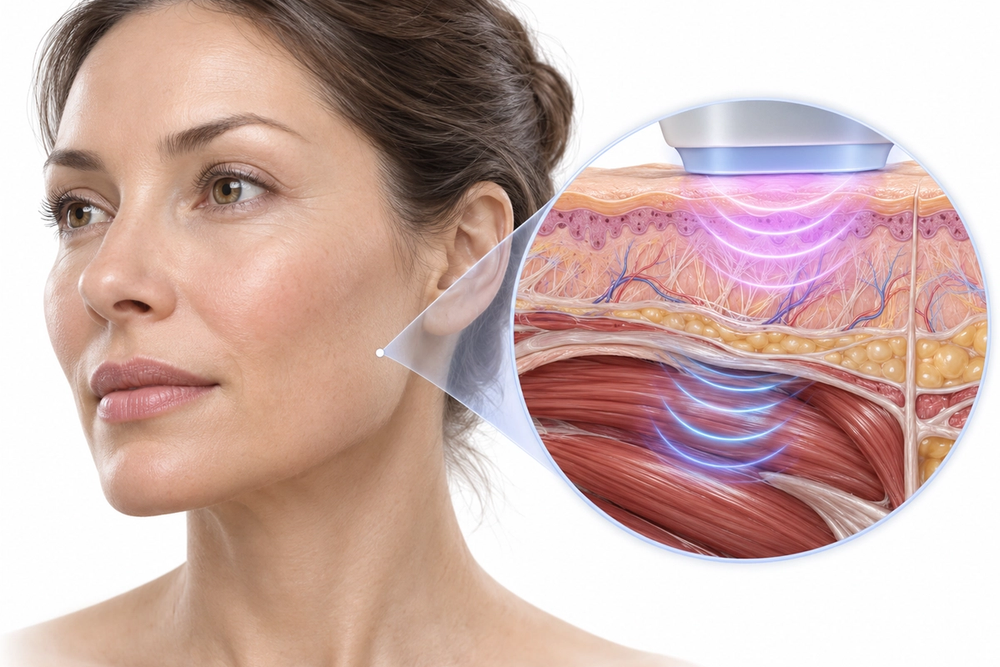
Can TriLift Tighten Your Face Without Surgery in Montreal?
TriLift combines facial muscle stimulation and radiofrequency to improve the appearance of facial tone and firmness. See how sessions, pricing, results and recovery work.
Read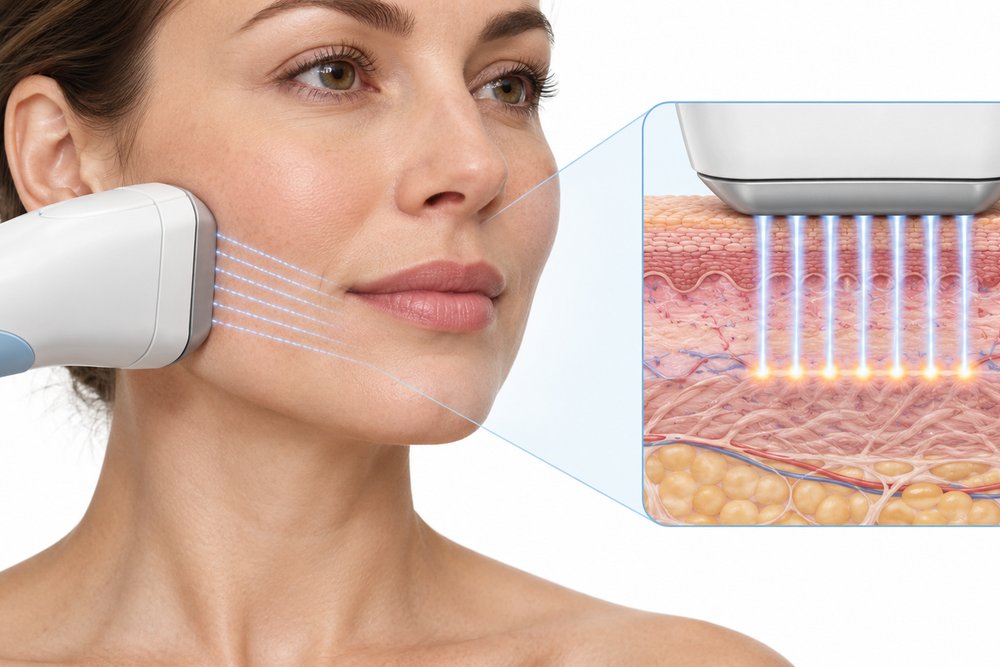
Does Sofwave tighten the face and neck without surgery?
Sofwave can improve mild facial and neck skin laxity without surgery. See how ultrasound treatment works, when results appear, what recovery involves, and Montreal prices.
Read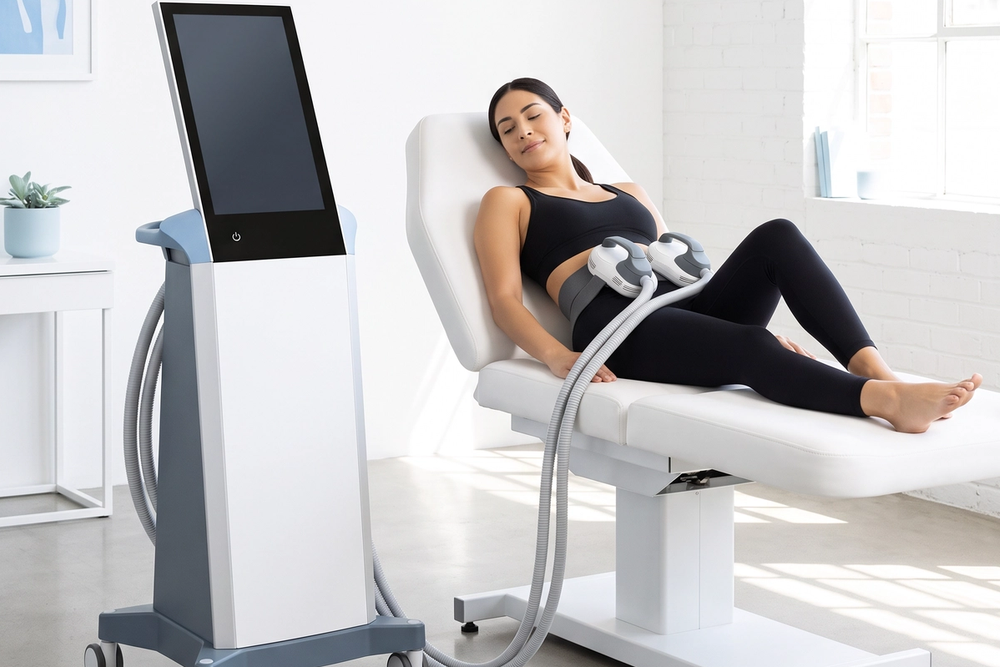
Body Contouring Compared: EMSCULPT NEO, CoolSculpting and Venus Bliss MAX
EMSCULPT NEO, CoolSculpting and Venus Bliss MAX reduce fat by three different mechanisms, and only two of them build muscle. Here is what each one does, which areas it treats, how many sessions to expect and how they combine.
Read