Blog
2026 · 9 min read
Still Fighting Acne or Acne Scars? Which Laser Works Best?
AviClear targets active acne, while ablative CO₂ laser improves the appearance of acne scars. Discover how these two treatments work and which option may suit your skin.
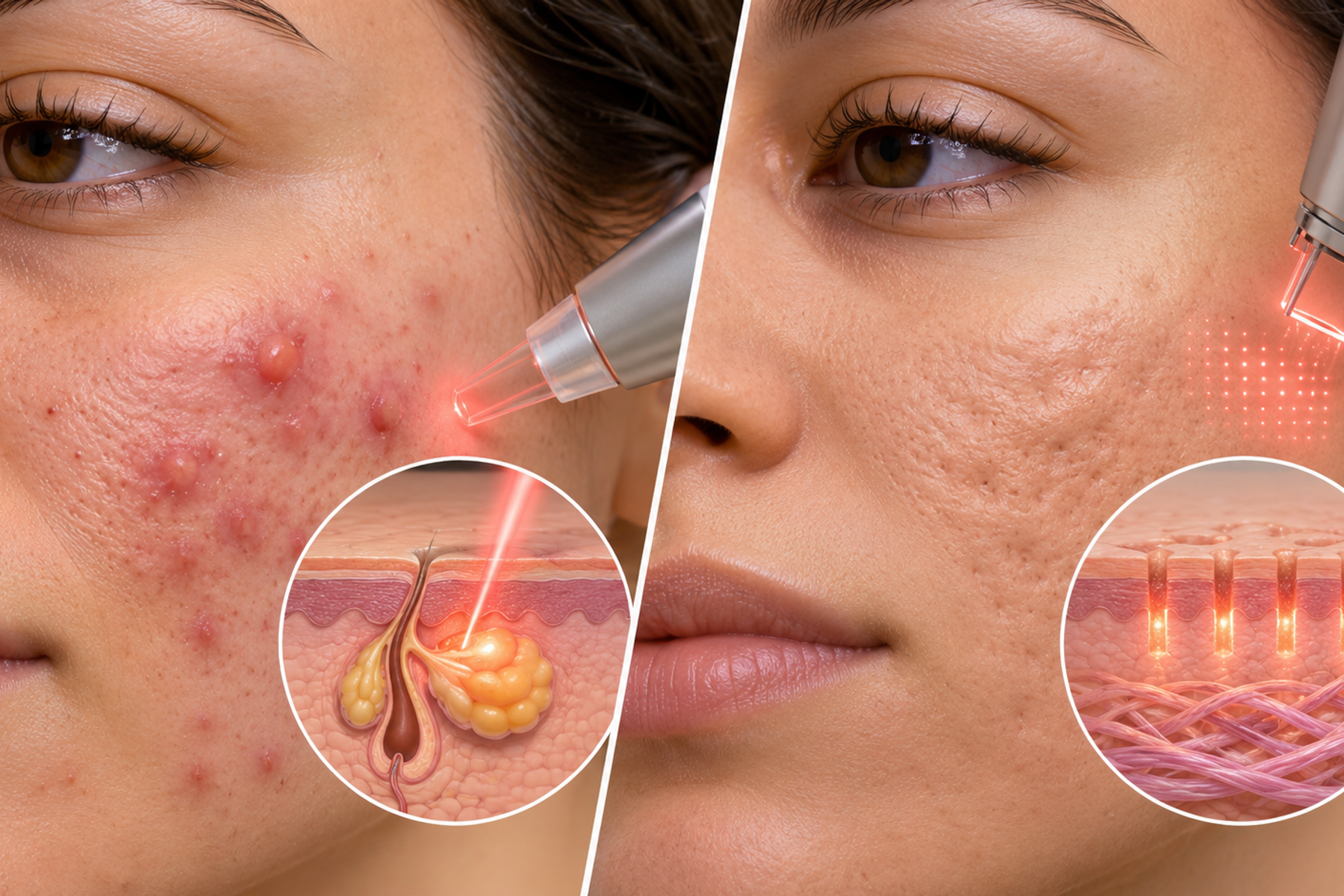
Key facts
- AviClear uses a 1726 nm non-ablative laser to target sebaceous glands in the treatment of inflammatory acne.
- AviClear treatment typically consists of 3 sessions spaced approximately 4 weeks apart.
- In one clinical study, 79.8% of AviClear participants achieved at least a 50% reduction in inflammatory acne lesions 12 weeks after treatment.
- Ablative CO₂ laser uses a 10,600 nm wavelength to resurface skin and improve the appearance of certain acne scars.
- Ablative fractional CO₂ resurfacing often requires approximately 7–14 days of initial visible healing, with redness sometimes lasting longer.
Acne and acne scars need different laser treatments. AviClear typically uses 3 sessions to treat active inflammatory acne, while ablative CO₂ laser resurfacing targets existing acne scars and uneven texture. The best choice depends on your current breakouts, scar type, and skin condition.
What is the difference between AviClear and CO₂ laser?
If you are dealing with persistent breakouts, acne scars, or both, choosing the right treatment can be confusing.
Two technologies available at Ideal Body Clinic address different stages of the acne journey.
AviClear is a non-ablative laser designed to treat active inflammatory acne by targeting the skin's oil-producing sebaceous glands.
Ablative CO₂ laser is a resurfacing treatment that removes controlled portions of damaged skin, supporting collagen remodeling and improving the appearance of certain acne scars.
The important distinction is simple: one focuses on reducing active acne, while the other focuses on improving the texture of skin already affected by scarring.
These treatments are not interchangeable. In some cases, they may become complementary parts of a personalized treatment plan.
How does AviClear treat active acne?
AviClear uses a specialized 1726 nm laser wavelength that targets sebaceous glands beneath the skin.
These glands produce sebum, the natural oil that helps protect the skin. Excess sebum can contribute to clogged pores and the development of acne.
AviClear delivers laser energy to these glands without ablating the skin's surface. Its cooling technology helps protect the surrounding skin during treatment.
Clinical research has evaluated this technology for mild to severe inflammatory acne, including persistent facial breakouts.
For patients who have tried conventional acne treatments or want to explore additional options, AviClear acne laser treatment in Montreal may be worth discussing during a consultation.
How many AviClear sessions will I need?
A typical AviClear treatment course consists of 3 sessions, often spaced approximately 4 weeks apart.
The pivotal clinical study used three treatments at intervals of 2 to 5 weeks.
Results generally develop progressively rather than appearing immediately after the first appointment.
In one prospective study of 104 participants, 79.8% achieved at least a 50% reduction in inflammatory acne lesions at 12 weeks after the final treatment. Results improved further at the 26-week follow-up.
These findings describe a study population, not a guaranteed outcome for every patient. Individual improvement varies.
Is there downtime after AviClear?
AviClear generally involves less surface recovery than ablative resurfacing.
Temporary effects can include:
Redness or sensitivity after treatment.
Temporary swelling or discomfort.
An acne flare during the treatment course.
Changes in breakouts as the skin responds over subsequent weeks.
Many patients can return to ordinary activities relatively quickly. However, the treating professional should provide individualized aftercare based on the skin's response.
AviClear is primarily an acne treatment. It should not be presented as a replacement for a scar-resurfacing procedure.
How does ablative CO₂ laser improve acne scars?
Acne can leave permanent structural changes in the skin, particularly depressed scars that create an uneven surface.
Ablative CO₂ laser resurfacing works by creating controlled areas of tissue removal and thermal injury. The healing response stimulates skin renewal and collagen remodeling.
The purpose is not simply to remove old skin. It is to encourage changes in the underlying tissue that may make certain scars less noticeable.
The treatment may be considered for:
Depressed or atrophic acne scars.
Uneven skin texture.
Selected fine lines and wrinkles.
Certain forms of sun-related skin damage.
CO₂ resurfacing can improve scar appearance, but it cannot guarantee complete scar removal.
Different acne scars respond differently. Deep ice-pick scars, for example, may require another procedure or a combination of treatments.
Ideal Body Clinic offers Secret PRO CO₂ laser resurfacing and RF microneedling, allowing patients to discuss resurfacing options based on their skin concerns.
How many CO₂ laser treatments will I need?
The number of sessions depends on the type and depth of scarring, the selected laser settings, the skin's response, and the level of improvement desired.
Some patients may be offered a single treatment, while others may benefit from a series or combination approach.
For more complex scarring, laser resurfacing may be paired with another technique rather than repeated alone.
A consultation is necessary to determine an appropriate plan.
How long does CO₂ laser healing take?
Visible recovery from ablative CO₂ resurfacing is generally longer than from AviClear.
Approximately 7 to 14 days of visible initial healing is a useful planning estimate for many ablative fractional treatments, although intensity and individual healing influence the timeline.
During recovery, patients may experience redness, swelling, crusting, peeling, and sensitivity.
Residual redness can last longer than the initial healing period, sometimes for several weeks or more.
Patients should follow the clinic's wound-care and sun-protection instructions carefully. Returning to makeup, exercise, exfoliating products, and sun exposure should be guided by the treating professional.
Should I treat active acne before acne scars?
In general, active acne should be managed before beginning elective resurfacing procedures for acne scars.
There are two reasons.
First, persistent breakouts may continue to create new scars while older scars are being treated.
Second, inflamed skin can complicate treatment planning and may make some scar procedures inappropriate until the acne is better controlled.
A patient dealing with both ongoing breakouts and depressed scars may therefore be offered a staged approach.
The first stage focuses on controlling inflammatory acne. AviClear may be one option, alongside other treatments selected according to the patient's needs.
The second stage focuses on assessing existing scars once the skin is sufficiently stable.
At that point, a clinician may consider CO₂ resurfacing or other scar-specific treatments.
This does not mean every patient needs both lasers, or that every AviClear patient should subsequently receive CO₂ resurfacing.
Can I combine AviClear with other treatments?
Some patients need more than one approach because acne may cause several different concerns.
Inflammatory lesions, depressed scars, enlarged-looking pores, residual redness, and pigmentation do not all respond to the same technique.
For example, once active acne is controlled, patients concerned about skin texture may discuss RF microneedling and skin remodeling as another potential approach.
Others may benefit from selected resurfacing treatments, or scar-specific procedures such as subcision, depending on the scar pattern.
The best treatment sequence is determined through examination rather than by combining procedures automatically.
Who should not have these laser treatments?
Not every patient is an appropriate candidate for either technology.
A professional assessment should review current skin inflammation, recent tanning or sun exposure, skin pigmentation, history of abnormal scarring, active infections, medications, and previous treatments.
Some conditions may require delaying treatment, modifying the approach, or choosing another option.
Ablative resurfacing requires particular attention to wound healing, post-inflammatory pigmentation, and infection risk.
Patients with darker skin tones should receive an individualized assessment because pigmentary side effects can be an important consideration with resurfacing lasers.
AviClear also requires a review of treatment suitability and relevant medical history.
Neither laser should be chosen solely from photographs or promotional claims.
How much do AviClear and CO₂ laser cost in Montreal?
At Ideal Body Clinic, the current referenced treatment offers are:
AviClear: $1,800 + tax for a 3-session full-face package, including 2 complimentary Laser Genesis treatments, subject to offer confirmation.
CO₂ laser: $850 for one treatment under a previously advertised promotional offer, with purchase deadlines and current availability to be confirmed.
Final pricing depends on the treatment area, current offers, and the treatment plan recommended after consultation.
Patients can also review the clinic's current medical-aesthetic promotions before booking.
Which laser should I choose for my skin?
The first step is identifying what bothers you most today.
If your main concern is recurring inflammatory acne, AviClear may be the more relevant treatment to discuss.
If your acne is already controlled but your skin has persistent depressed scars, CO₂ resurfacing may be more appropriate.
If you have both concerns, the plan may involve treating acne first and reassessing the remaining scars afterward.
A consultation can help determine whether one treatment, a staged approach, or an alternative would better support your skin goals.
Healthy skin is not about finding one treatment for every concern. It is about developing the right plan for your skin, at your pace.
Results vary from person to person and are not guaranteed. Nothing here is medical advice. Book a consultation and we will look at your case.
Sources
- https://www.accessdata.fda.gov/cdrh_docs/pdf21/K213461.pdf?utm_source=chatgpt.com
- https://www.accessdata.fda.gov/cdrh_docs/pdf23/K230660.pdf?utm_source=chatgpt.com
- https://pubmed.ncbi.nlm.nih.gov/37328000/?utm_source=chatgpt.com
- https://pmc.ncbi.nlm.nih.gov/articles/PMC12856072/?utm_source=chatgpt.com
- https://pubmed.ncbi.nlm.nih.gov/20028443/?utm_source=chatgpt.com
- https://pubmed.ncbi.nlm.nih.gov/22296284/?utm_source=chatgpt.com
- https://pubmed.ncbi.nlm.nih.gov/29304516/?utm_source=chatgpt.com
Keep reading
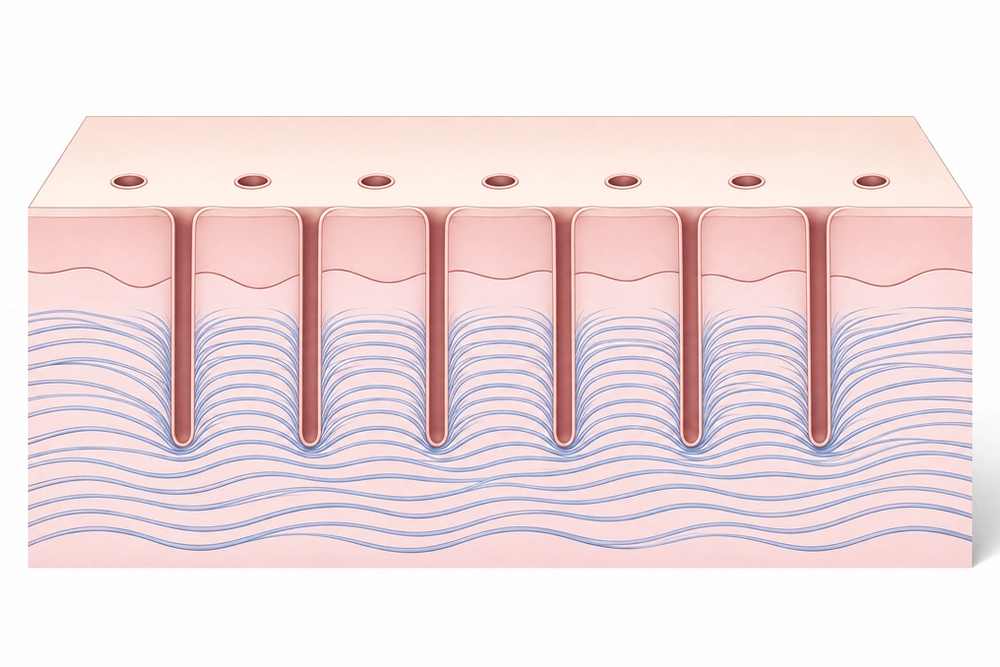
CO2 Laser Resurfacing Recovery: What Happens Day by Day?
Plan about a week after a deep CO2 laser session: redness days 1 to 3, flaking days 3 to 7, a new surface at 2 to 4 weeks. Here is each stage and what to do.
Read
Do You Need a Prescription for IV Therapy?
Yes: at Ideal Body Clinic, IV therapy is given on your own doctor’s prescription, with the formula and the dose. What to ask for, what to bring, and how a session runs.
Read
Microneedling or CO2 Laser for Acne Scars: Which One Do You Need?
Shallow acne scars usually respond to microneedling in 3 to 6 sessions; deep pitted scars call for CO2 laser in 1 to 3. How to tell which one fits your skin.
Read