Blog
2026 · 3 min read
Crepey Skin Around the Eyes: How the Right Treatment Gets Chosen
The eye area is treated with ultrasound, laser or both, and the choice turns on four things a consultation measures. What each technology is actually for, and how they get combined.
Key facts
- The skin around the eyes is the thinnest on the face, which is why eye-area protocols usually combine a tightening technology with a resurfacing one.
- Sofwave uses ultrasound energy to prompt collagen remodelling; CO₂ laser resurfaces the skin's surface. They address different layers and different problems.
- Four factors decide the protocol: skin type and pigmentation, degree of laxity, previous treatments, and how much recovery time the patient can take.
- A surgical eyelid lift removes excess skin; energy-based treatment works on skin quality and firmness. They are different procedures with different degrees of correction.
- At Ideal Body Clinic in Montreal, eye-area combination protocols are priced at $1,900.
Crepey skin around the eyes is treated with ultrasound tightening, laser resurfacing, or both together. Which one suits you is decided by four things: your skin type, how much laxity is present, what you have had done before, and how much recovery time you can take.
Why does the eye area get treated differently from the rest of the face?
Because the skin is thinner there than anywhere else on the face, and it moves constantly. Every blink, squint and smile folds it. Collagen and elastin production slows with age, and thin skin under constant movement shows that sooner than the cheek or the jawline does.
This is also why a single technology rarely covers the whole picture. A treatment that firms the deeper support of the skin leaves the surface texture where it was. A treatment that resurfaces the surface leaves the laxity where it was. Around the eyes, patients usually arrive with both.
What is each technology actually for?
Sofwave: ultrasound, aimed at firmness
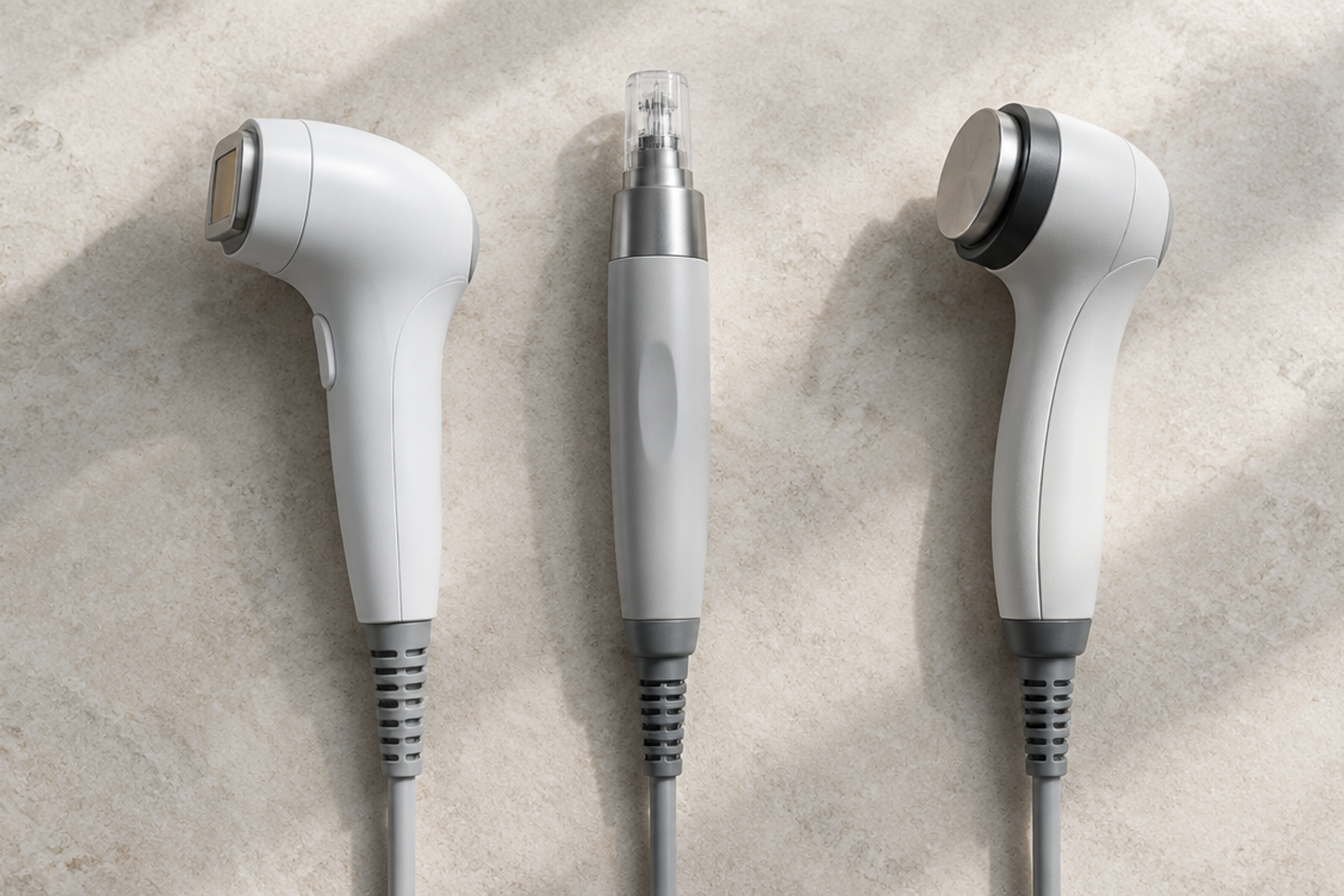
Sofwave delivers ultrasound energy into the skin to prompt a collagen-remodelling response. Its job in an eye protocol is the firmness of the skin, rather than its surface. Our fuller explainer on Sofwave skin tightening covers what it lifts and who it suits.
CO₂ laser: ablative, aimed at the surface
CO₂ laser resurfacing works on the surface itself: crepey texture, fine lines, sun-related change. It comes with real downtime, which is exactly why it is chosen deliberately rather than by default. It is delivered here on the Secret PRO platform.
Fotona: laser, delivered as a series
The Fotona resurfacing laser is a platform with several modes, which is what allows a progressive series rather than a single intensive pass. In an eye protocol its role is gradual laser rejuvenation across multiple sessions.
TriLift and RF microneedling: the supporting stage
These support collagen remodelling between the tightening and resurfacing stages.
How do the four factors change the answer?
Skin type and pigmentation. Ablative laser behaves differently on different skin tones. This is the single factor most likely to rule a CO₂-based protocol in or out.
Degree of laxity. Mild laxity responds to tightening. Significant excess skin is a surgical question, and an honest consultation says so rather than selling around it.
Previous treatments. What you have already had changes what the next step should be, and occasionally means waiting rather than adding.
Recovery time you can take. A protocol built around CO₂ resurfacing asks for real downtime. A progressive Fotona series spreads the same intent across more appointments with less disruption each time. Patients with a wedding in three weeks and patients with a free month get different recommendations for the same skin.
Why combine technologies instead of repeating one?
Because eye-area ageing happens at more than one level at once. Combining a tightening technology with a resurfacing one addresses the support of the skin and its visible surface in the same protocol, which repeating a single modality cannot do.
What does this cost in Montreal?
Ideal Body Clinic offers two eye-area combination protocols, both at $1,900, with an optional exosome add-on at $399. The full breakdown of what sits in each one is on the heavy or hooded eyelids page.
When is surgery the better answer?
When there is significant excess skin. A surgical eyelid lift removes skin; an energy-based protocol improves the quality and firmness of the skin that is there. They are different procedures. A consultation that tells you which one your eyes actually call for is worth more than one that sells you the one on offer.
Frequently asked questions
Results vary from person to person and are not guaranteed. Nothing here is medical advice — book a consultation and we will look at your case.
Keep reading
Body Contouring Compared: EMSCULPT NEO, CoolSculpting and Venus Bliss MAX
EMSCULPT NEO, CoolSculpting and Venus Bliss MAX reduce fat by three different mechanisms, and only two of them build muscle. Here is what each one does, which areas it treats, how many sessions to expect and how they combine.
Read
Bladder Leaks After Childbirth: Which Treatments Help?
About one in three women leak urine in the first year after having a baby. Here is the order that works: pelvic floor training first, Emsella when progress plateaus, and a doctor for anything more.
Read
How Much Does Laser Hair Removal Cost in Montreal?
The price of laser hair removal comes down to the size of the area, the number of sessions and whether you book a package. Here is how each one works, and what to ask before you compare clinics.
Read