Blog
2026 · 8 min read
What Can Secret PRO CO₂ Improve?
Secret PRO CO₂ can improve acne scars, texture, fine lines, sun damage and pores. This guide explains session numbers and evidence-based combinations.
Key facts
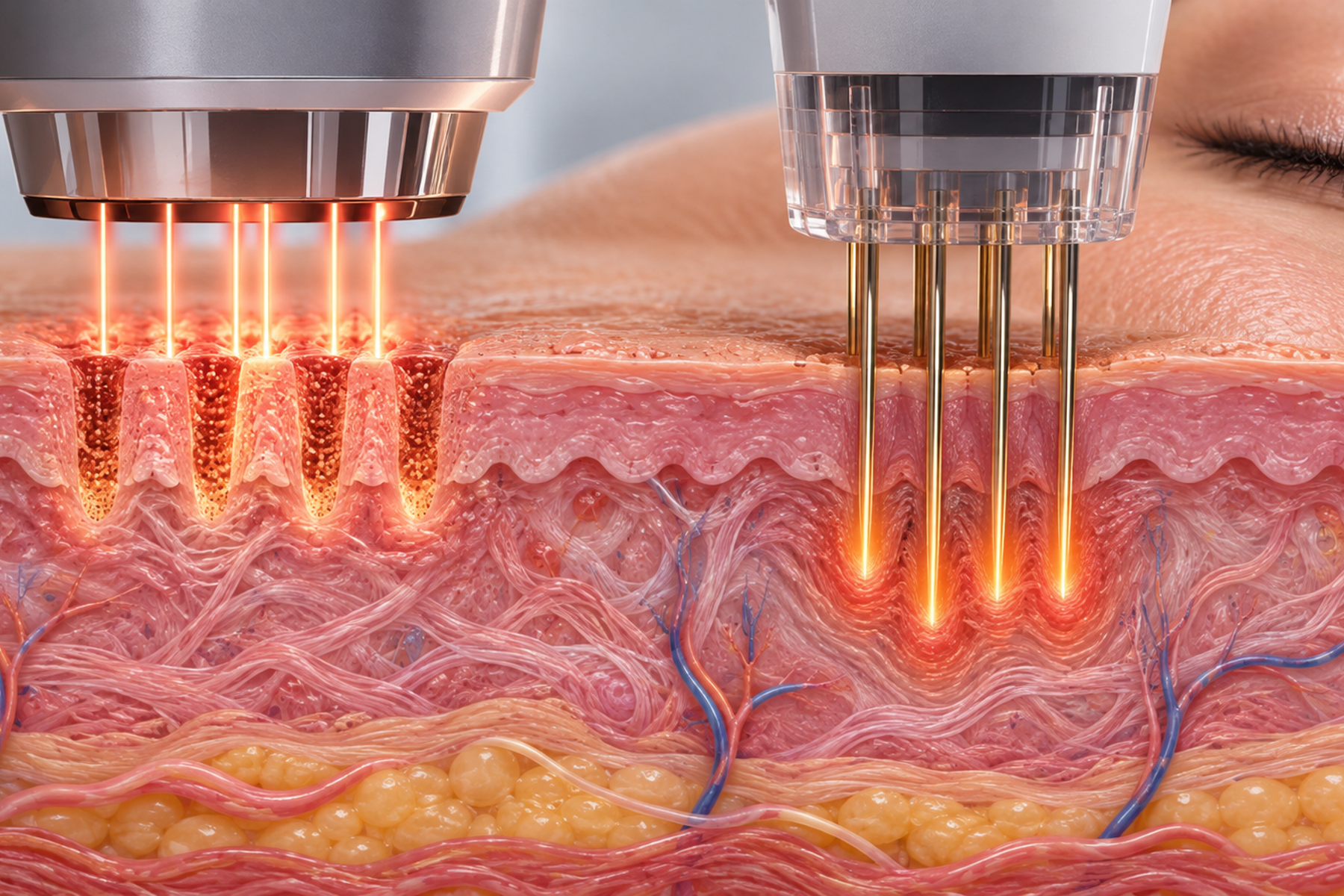
- Secret PRO uses a 10,600 nm fractional CO₂ laser for skin resurfacing.
- Secret PRO combines 2 technologies in one platform: fractional CO₂ laser and RF microneedling.
- A prospective photoaging study used 2 to 3 fractional CO₂ treatments, with an average of 2.4 sessions.
Secret PRO CO₂ resurfacing can improve acne scars, rough texture, fine lines, sun damage, enlarged pores and overall skin quality. Most treatment plans use 1 to 3 sessions, while deeper acne scars may need a longer, combination-based plan.
The right number depends on skin type, scar pattern, treatment intensity, downtime tolerance and whether RF microneedling, PRP, subcision or filler is added.
What does Secret PRO CO₂ laser resurfacing treat?
Secret PRO uses a fractional 10,600 nm CO₂ laser to create controlled microscopic treatment zones while leaving surrounding skin between those zones intact. Cutera lists fine lines, aging skin, sun damage, pigment, scars, acne scars, enlarged pores, uneven tone and texture, and overall skin quality among the concerns addressed by the platform.
In practice, Secret PRO CO₂ and RF microneedling is most useful when the main goal is resurfacing: smoother texture, softer visible lines, less noticeable scarring and improvement in photodamaged skin. It is not a one-setting treatment. The depth, density and energy can be adjusted to match the problem and the amount of recovery a patient can reasonably plan for.
Can CO₂ laser improve acne scars?
Fractional CO₂ is a well-established option for atrophic acne scars. It can be particularly useful when scars create uneven surface texture or visible depressions. However, acne scars are not all built the same way. Rolling, boxcar and ice-pick scars may need different techniques, and systematic reviews emphasize that the number of sessions and laser parameters should be individualized.
That is why a scar plan is often more effective when it treats the scar structure, not just the surface. Deep or tethered scars may need subcision, and selected depressions may benefit from hyaluronic acid filler as part of a staged plan.
Can it improve fine lines, sun damage and rough texture?
Yes, in appropriately selected patients. Fractional CO₂ has clinical evidence for photoaging, including improvement in texture and dyschromia. Cutera also positions Secret PRO for fine lines, sun damage, enlarged pores, tone and texture.
Pigment deserves a careful distinction. CO₂ may improve some sun-related uneven tone as part of resurfacing, but it is not the right treatment for every pigmentation problem. Post-inflammatory hyperpigmentation is also a known possible adverse effect after CO₂ laser. Skin tone, recent sun exposure, the type of pigment and treatment intensity all matter when deciding whether resurfacing is appropriate.
How many Secret PRO CO₂ treatments will I need?
One treatment can produce a visible change, but one session is not the universal answer. Cutera publishes before-and-after examples after a single Secret PRO treatment, while clinical studies of fractional CO₂ for facial photoaging have used two to three sessions. Acne-scar studies commonly use a series and vary substantially in treatment number and spacing.
A practical way to think about planning is:
- Mild texture or a lighter resurfacing goal: 1 session may be enough to start, followed by reassessment.
- Photoaging, visible texture or fine lines: 2 to 3 sessions may be considered depending on intensity and recovery.
- Moderate to deeper acne scarring: 3 or more sessions may be needed, often with another scar-specific treatment rather than CO₂ alone.
Treatment spacing also varies. Published studies have used intervals from about 4 to 8 weeks, and more aggressive resurfacing may require a longer recovery window. The goal is not to fit every patient into the same package. It is to choose enough treatment to create meaningful change without adding unnecessary intensity.
What can I combine with CO₂ laser for better results?
The best combination depends on what is limiting the result. More treatments are not automatically better. Each modality should have a job.
Can Secret PRO combine CO₂ with RF microneedling?
Yes. This is one of the defining features of Secret PRO. The platform includes both fractional CO₂ resurfacing and RF microneedling. Cutera's Revive protocol layers RF microneedling and CO₂ in one treatment, while the modalities can also be used independently.
The logic is complementary. CO₂ focuses strongly on resurfacing and surface irregularity, while RF microneedling delivers energy at adjustable depths in the dermis. Published studies and a systematic review of acne-scarring treatment have reported improvement when fractional CO₂ and RF microneedling are combined.
For patients whose concern includes both visible texture and deeper scar remodeling, this can be a more targeted plan than simply increasing the CO₂ intensity.
Can PRP be added after fractional CO₂?
PRP is one of the better-studied biologic combinations for atrophic acne scars. Meta-analyses of randomized and controlled studies have found that fractional CO₂ plus autologous PRP can improve acne-scar outcomes and patient satisfaction compared with fractional CO₂ alone. Some analyses also found shorter crusting or recovery-related symptoms.
That does not mean every CO₂ patient needs PRP. The strongest evidence is for acne-scar treatment, so it makes the most sense when scarring is a major goal rather than as a routine add-on for everyone.
When do subcision or fillers make more sense?
A laser works from the surface downward, but some rolling scars are held down by fibrous attachments. Subcision is designed to release that tethering. Clinical studies have found better acne-scar improvement when fractional CO₂ is combined with subcision than with laser alone in selected patients.
For individual depressions that still need structural support, filler may also be considered. A randomized study found benefit from combining subcision with either fractional CO₂ or cross-linked hyaluronic acid filler. These are medical decisions and are usually staged according to scar type, healing and the treatment area.
What if my main concern is loose skin as well as texture?
CO₂ resurfacing can improve skin quality, but a patient whose main concern is laxity may need a different treatment strategy rather than progressively stronger resurfacing. After assessing the skin, a separate Sofwave skin-tightening treatment can be discussed when laxity is a distinct goal. Sofwave's manufacturer lists lifting of lax neck and submental tissue among its cleared applications.
The timing should be planned around healing. Not every technology should be stacked into the same visit.
Is a stronger CO₂ treatment always better?
No. Stronger settings can increase the treatment effect, but they also change recovery and risk. Cutera's own Secret PRO platform includes lighter and more intensive CO₂ options because patients do not all need the same depth of resurfacing.
The safest plan considers skin type, pigmentation risk, active skin conditions, medical history and how much downtime is acceptable. Cutera's published safety information lists possible effects including pain, swelling, redness, acne or milia, pigment changes, wounds, dermatitis, infection and treatment-pattern changes. A clinical assessment is therefore part of choosing the treatment level.
When should I judge my final result?
Do not judge collagen-remodeling treatments only by the first few days after resurfacing. The immediate healing phase and the longer remodeling phase are different. Clinical studies commonly assess outcomes weeks to months after treatment, and improvement can continue as the skin remodels.
For that reason, the next session should be based on healing and progress, not on rushing to complete a preset number.
What is the best way to build my Secret PRO plan?
Start with the problem you want to change most. If it is surface texture or photoaging, CO₂ may be the central treatment. If it is acne scarring, the scar type determines whether RF microneedling, PRP, subcision or filler should be added. If laxity is separate from texture, a different tightening treatment may belong elsewhere in the plan.
Ideal Body Clinic offers a range of skin resurfacing and rejuvenation treatments, but the useful question is not how many technologies can be combined. It is which treatment, or combination, addresses each layer of the problem with a reasonable recovery plan.
For many patients, that means starting with 1 treatment for lighter resurfacing or planning 2 to 3 sessions for more visible photoaging and texture. Acne scars often need 3 or more sessions and a multimodal approach. Results vary, and the final plan should be based on an in-person assessment
Results vary from person to person and are not guaranteed. Nothing here is medical advice — book a consultation and we will look at your case.
Keep reading
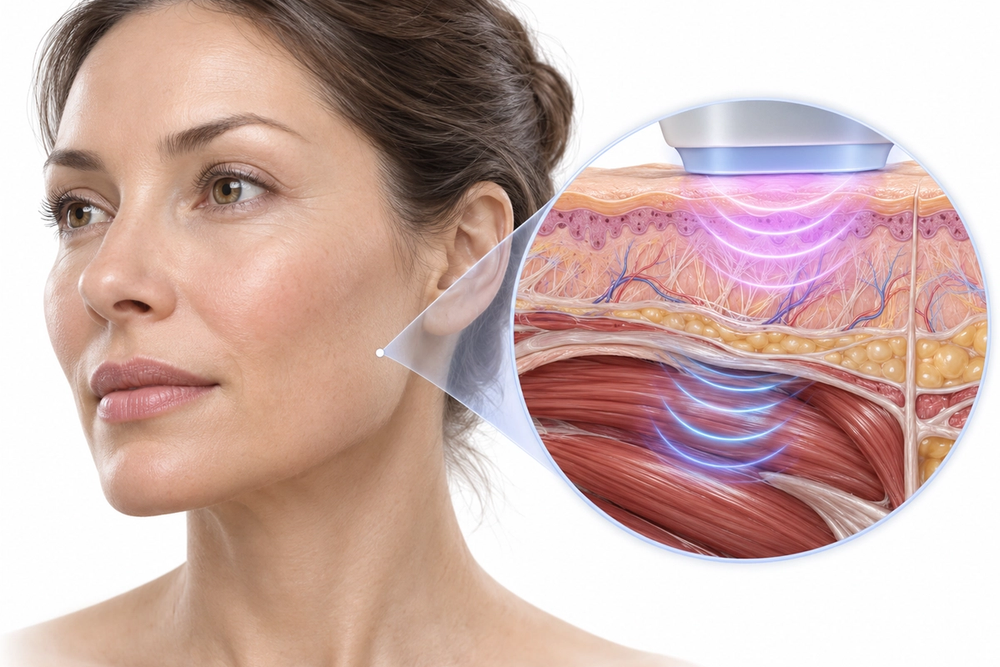
Can TriLift Tighten Your Face Without Surgery in Montreal?
TriLift combines facial muscle stimulation and radiofrequency to improve the appearance of facial tone and firmness. See how sessions, pricing, results and recovery work.
Read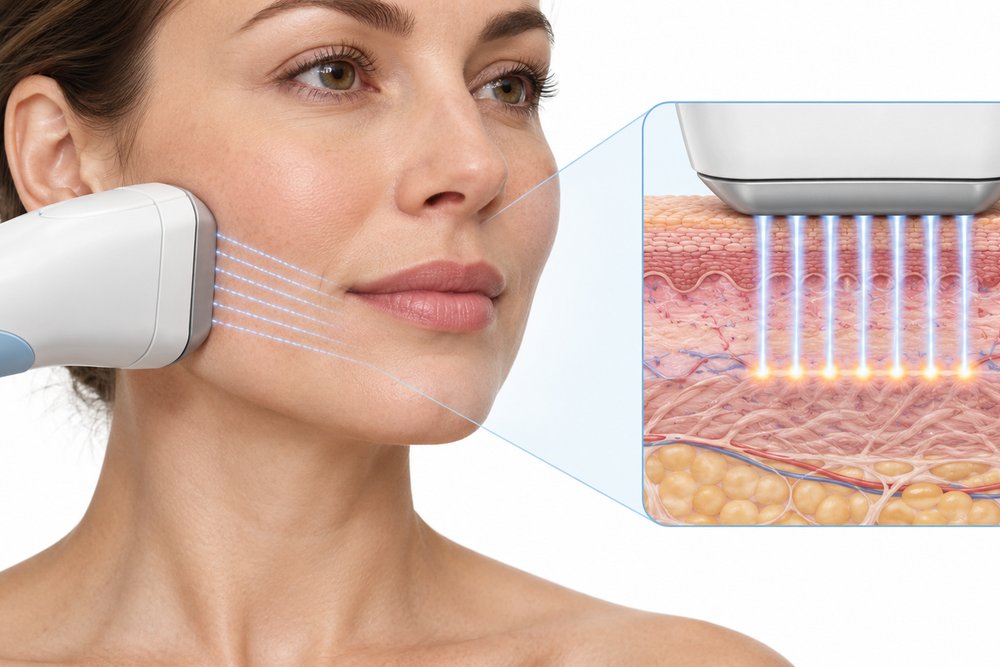
Does Sofwave tighten the face and neck without surgery?
Sofwave can improve mild facial and neck skin laxity without surgery. See how ultrasound treatment works, when results appear, what recovery involves, and Montreal prices.
Read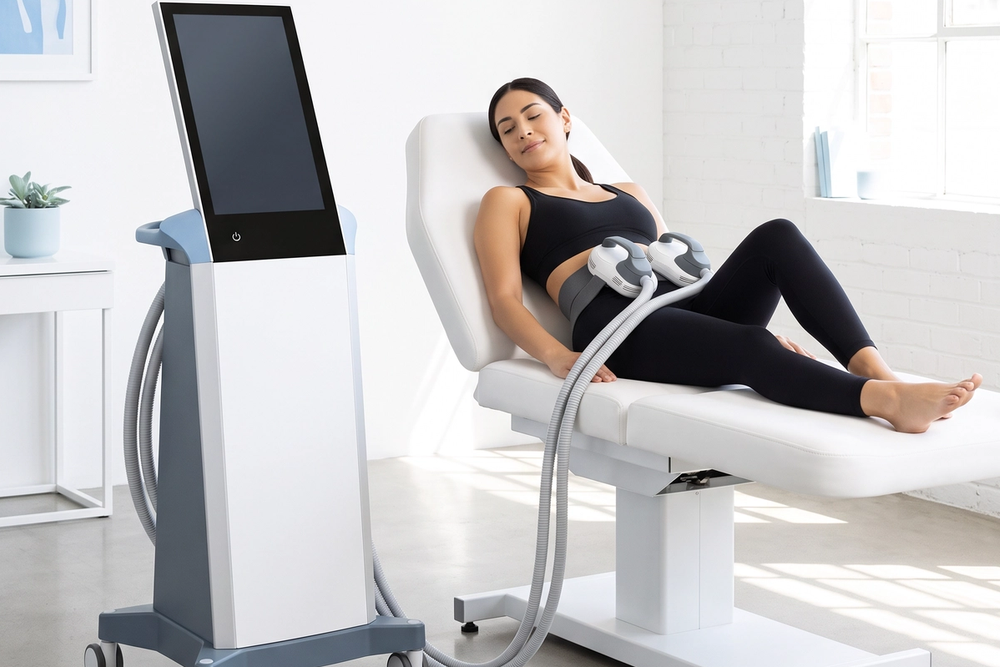
Body Contouring Compared: EMSCULPT NEO, CoolSculpting and Venus Bliss MAX
EMSCULPT NEO, CoolSculpting and Venus Bliss MAX reduce fat by three different mechanisms, and only two of them build muscle. Here is what each one does, which areas it treats, how many sessions to expect and how they combine.
Read