Blog
2026 · 7 min read
PRP for Skin: What Does a Full Course Look Like?
A PRP course is usually 3 sessions a month apart, judged at 3 months. Here is the month-by-month timeline, and an honest look at what blinded trials actually found.
Key facts
- Health Canada has never reviewed PRP for safety, effectiveness or quality, so no clinic in Canada can describe PRP as Health Canada approved.
- Growth factor release from PRP begins about 10 minutes after injection, and at least 95 percent is released within the first hour.
- A meta-analysis of 19 periorbital studies covering 455 patients found a mean of 3 sessions at mean intervals of 23 days.
- A review of 24 studies and 480 patients found PRP produces modest improvement in skin texture and lines, typically under 50 percent.
- In one randomised trial, blinded dermatologists found no significant difference in photoaging scores between PRP and plain saline.
- Quebec requires an in-person medical evaluation before any aesthetic injection, and telemedicine assessment does not meet the requirement.
A full PRP course for skin is usually 3 sessions about a month apart, with the result judged at 3 months. Patients commonly report better texture and tone. Blinded studies are less certain than patients are, and this article covers both, month by month.
If you only read one section, make it the one on evidence near the end. PRP is a treatment where what patients report and what blinded assessors measure do not always agree, and knowing that before you book is worth more than any before-and-after photograph.
What is PRP, and is it approved in Canada?
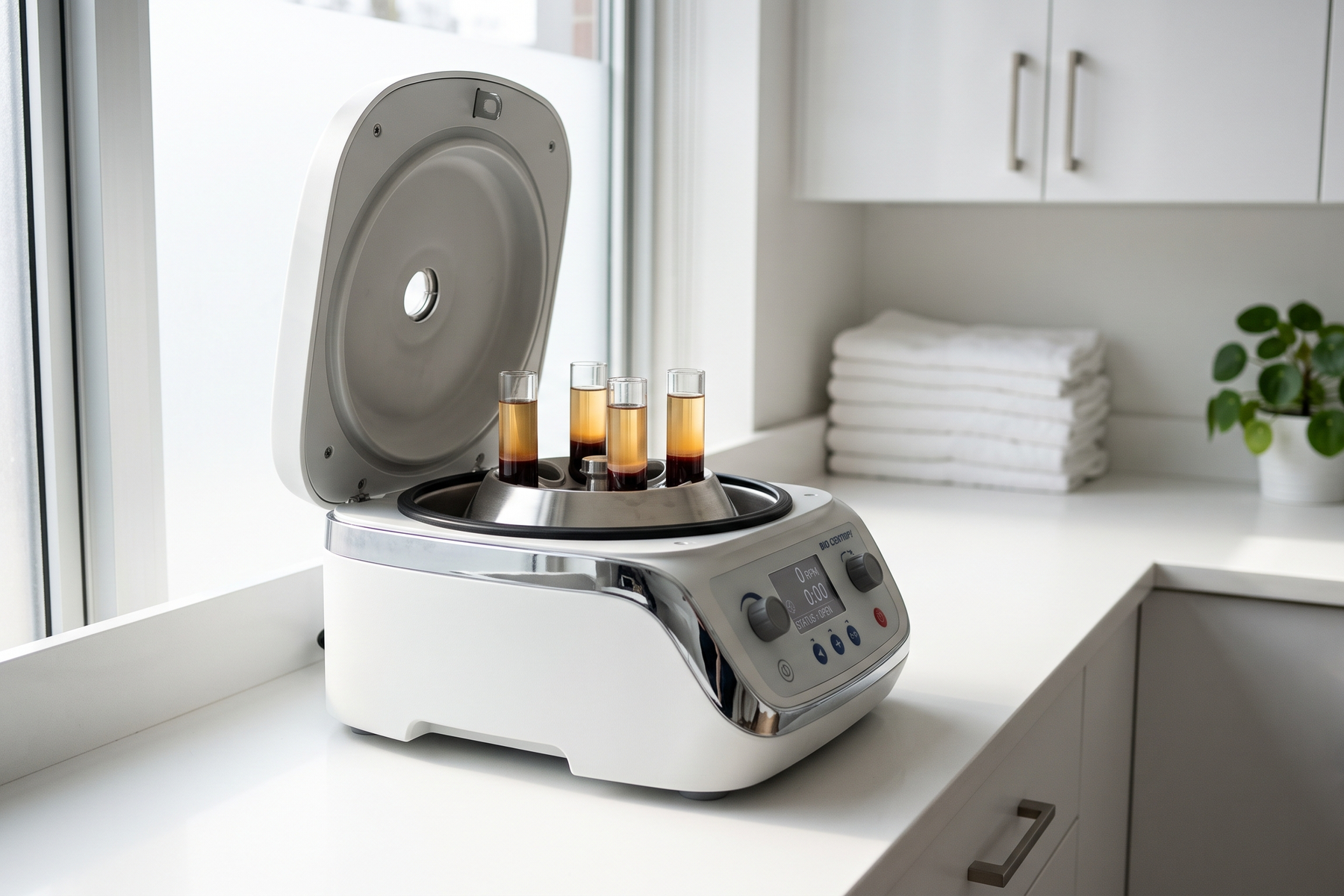
PRP is platelet-rich plasma. A small amount of your blood is drawn, spun in a centrifuge to concentrate the platelets, and the concentrate is injected back into your skin. Nothing synthetic is added.
On the regulatory question, the answer is more interesting than a yes or no. Health Canada stated in July 2019 that PRP meets the definition of a drug, but that when a practitioner prepares it from a patient and gives it back to that same patient in a single procedure, it falls under the practice of medicine and is regulated provincially rather than federally.
The consequence is worth stating plainly. Health Canada has never received an application to market PRP or to run a clinical trial on it, and has therefore not reviewed evidence on its safety, effectiveness or quality for any use. So no clinic in Canada can honestly describe PRP as Health Canada approved, and Health Canada has said it enforces against deceptive advertising in this area.
What is regulated is the hardware. The centrifuges and processing kits are licensed medical devices, and there are currently around eleven licensed PRP systems in Canada. Asking which system a clinic uses is a fair question.
What happens in the first hour?
The biology starts fast. Growth factors begin releasing from the platelets about ten minutes after injection, and at least 95 percent of them are released within the first hour. The platelets then continue producing and releasing further growth factors for around seven days.
This is why the treatment is described as a signal rather than a filler. Nothing is being added to hold up tissue. Something is being asked of your own cells.
What do weeks one and two look like?
This is the visible-downtime window, and it is short. Burning, redness, swelling and bruising are the reported effects, and they are transient, generally resolving in under two weeks.
Pain during the injections is the most consistent complaint. One point worth raising with your injector: injected local anaesthetic changes the pH of PRP and has been reported to reduce its effect, so topical numbing, cooling or vibration are often preferred.
You will not see a skin result in this window. Anything you see is the injection settling.
When do results start showing?
Around week four is when patients typically first notice something, based on single-injection studies. In that same body of work, the greatest improvement from one injection was seen around week eight.
Be careful with those two numbers, because they describe the arc after a single treatment, not the arc of a three-session course. Your clinic is likely treating you again at week four, which restarts the clock rather than continuing it.
What does the three-month mark mean?
Three months is where the literature concentrates. A meta-analysis of nineteen periorbital studies covering 455 patients found patients received a mean of three sessions at mean intervals of 23 days, with follow-up averaging three months.
So three months is both the end of a standard course and the point at which most published measurement happens. It is the fair moment to judge your result, and it is roughly when photographs taken under matched lighting become meaningful.
Do the results last?
Six months is the outer edge of what is reliably documented. Beyond that, one of the major reviews states directly that the persistence of the effect is not known.
Maintenance sessions at six or twelve months are standard clinic practice, and they are reasonable on the logic of the treatment. They are not, at present, supported by trial data. Anyone telling you a maintenance schedule is evidence-based is going beyond what has been published.
How good is the evidence, honestly?
This is the section most articles skip.
The largest review, covering 24 studies and 480 patients, concluded that PRP monotherapy produces at least temporary and modest improvement in facial skin appearance, texture and lines, with the degree of improvement typically under 50 percent. Modest is the operative word, and it is the reviewers' own.
A 2026 meta-analysis of nine randomised trials found patient satisfaction favoured PRP, and objective efficacy also favoured it, but the objective finding rested on only three studies with a confidence interval that barely cleared the threshold for significance. All nine trials carried unclear or high risk of bias.
Two trials deserve to be named because they cut against the treatment. In one randomised trial, blinded dermatologists scoring photoaging found no significant difference between PRP and plain saline, while the patients themselves rated the PRP side as significantly better. In a 2024 double-blind split-face trial, PRP was compared against platelet-poor plasma, and both improved periocular wrinkles with no significant difference between them.
None of that makes PRP worthless. Patient-reported improvement is a real outcome, safety is good, and the treatment is autologous. But it does mean the defensible claim is that many patients are satisfied with modest improvement in texture and tone, not that PRP is clinically proven to reverse ageing.
If your priority is measurable change in skin texture with a stronger evidence base, a resurfacing or microneedling treatment may be a better first step, and PRP is often used alongside those rather than instead of them.
What are the risks and who should not have it?
Reported side effects are burning, redness, swelling and bruising, all transient. Across the meta-analysis, adverse event rates did not differ significantly from control groups, and no severe adverse events were reported in the trials.
The serious risk is not the plasma, it is the injection. Case reports document patients irreversibly blinded after facial platelet injections, caused by material entering an artery and travelling backwards to the eye. The glabella between the brows is the highest-risk area. This is a risk shared by every facial injectable, and it is the reason who injects you matters more than what is injected.
PRP is not used in people with critical thrombocytopenia, platelet dysfunction, haemodynamic instability, sepsis, or infection at the injection site. Caution applies with recent NSAID use in the previous 48 hours, a glucocorticoid injection in the previous two weeks, recent fever or illness, malignancy, anaemia and smoking.
What does Quebec require?
In Quebec, any patient seeking injections for aesthetic purposes must first have a medical evaluation, and it must be in person. Remote assessment by telemedicine does not meet the requirement.
Delegation to a nurse requires an individual prescription written for that specific patient. Collective prescriptions are not permitted for aesthetic injections, and the prescribing physician must be accessible on site to manage a complication. Written informed consent is required.
Since PRP involves drawing blood as well as injecting it, both steps sit inside that framework, which is a reasonable thing to ask a clinic to explain before you book. If you are weighing this against other options for skin quality, it is worth reviewing the full treatment range and treating PRP as one tool among several rather than a category of its own. Where volume rather than skin quality is the real issue, dermal filler answers a different question entirely.
Results vary from person to person and are not guaranteed. Nothing here is medical advice — book a consultation and we will look at your case.
Sources
- https://recalls-rappels.canada.ca/en/alert-recall/health-canada-clarifies-position-platelet-rich-plasma-treatments
- https://recalls-rappels.canada.ca/fr/avis-rappel/sante-canada-clarifie-sa-position-sur-traitements-au-plasma-riche-en-plaquettes
- https://cms.cmq.org/files/documents/Guides/p-1-2020-08-24-fr-guide-medecine-esthetique.pdf
- https://www.cmq.org/fr/actualites/medecine-esthetique-observations-et-responsabilites
- https://link.springer.com/article/10.1007/s00403-019-01999-6
- https://link.springer.com/article/10.1007/s00403-020-02173-z
- https://academic.oup.com/asjopenforum/article/doi/10.1093/asjof/ojaf150/8322866
- https://www.mdpi.com/2227-9059/12/1/7
- https://jcadonline.com/platelet-rich-plasma-review/
- https://pmc.ncbi.nlm.nih.gov/articles/PMC7722697/
Keep reading
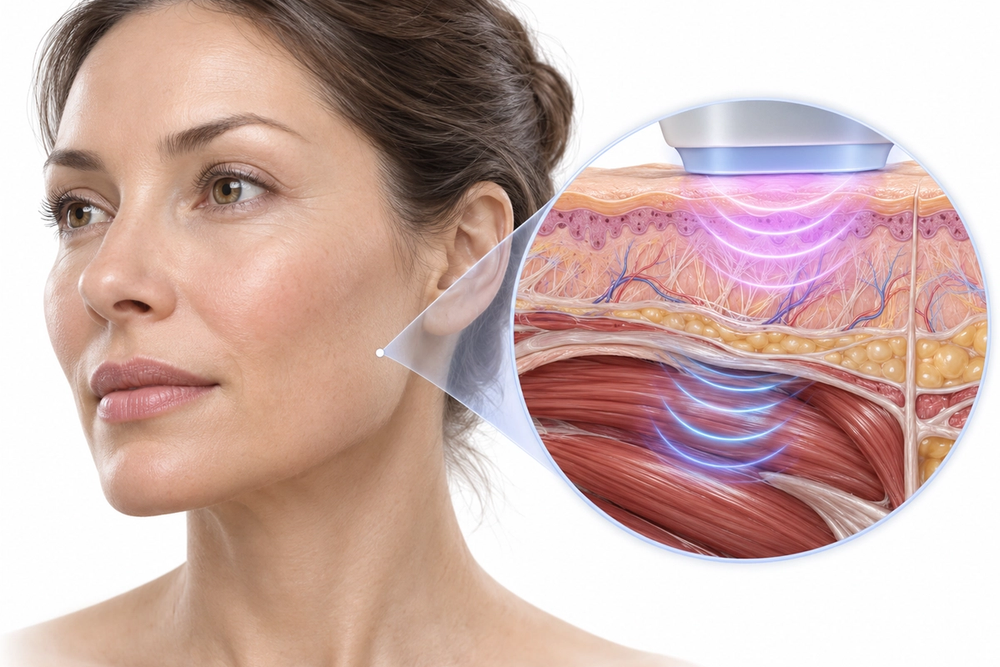
Can TriLift Tighten Your Face Without Surgery in Montreal?
TriLift combines facial muscle stimulation and radiofrequency to improve the appearance of facial tone and firmness. See how sessions, pricing, results and recovery work.
Read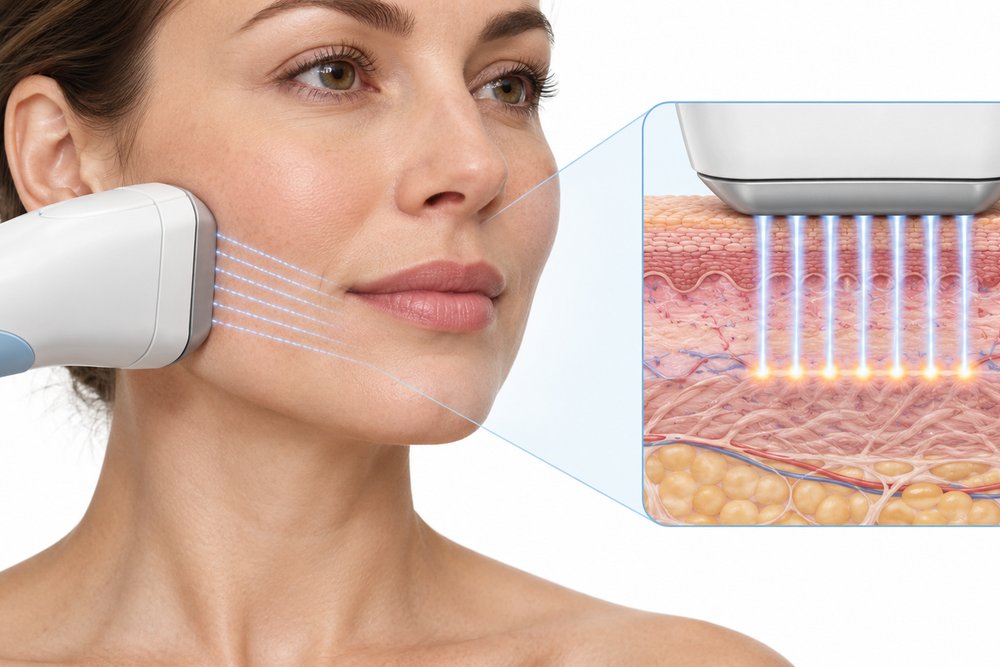
Does Sofwave tighten the face and neck without surgery?
Sofwave can improve mild facial and neck skin laxity without surgery. See how ultrasound treatment works, when results appear, what recovery involves, and Montreal prices.
Read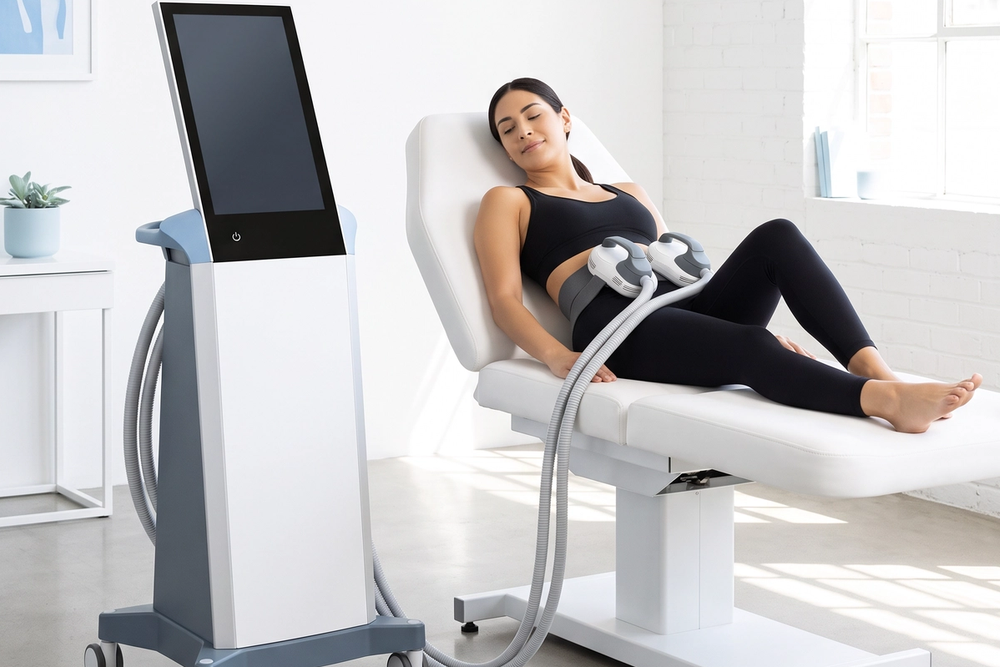
Body Contouring Compared: EMSCULPT NEO, CoolSculpting and Venus Bliss MAX
EMSCULPT NEO, CoolSculpting and Venus Bliss MAX reduce fat by three different mechanisms, and only two of them build muscle. Here is what each one does, which areas it treats, how many sessions to expect and how they combine.
Read