Blog
2026 · 9 min read
PICO GENESIS for sun spots and age spots
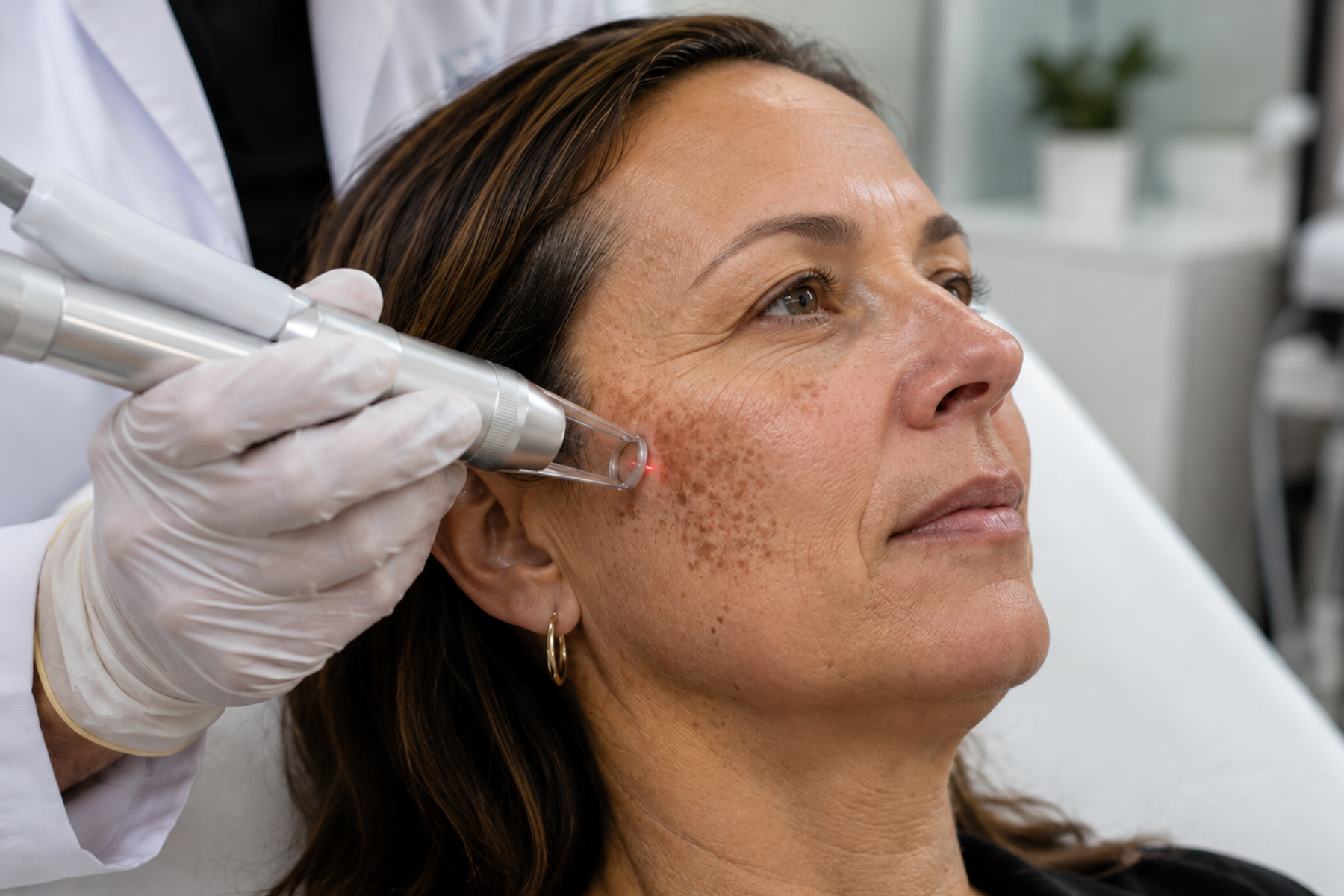
PICO Genesis with Cutera Enlighten can improve sun spots and age spots. This guide explains how it works, how many sessions to expect, when to start, and what can be combined with it.
Key facts
- Cutera describes a typical PICO Genesis skin revitalization series as approximately 2 to 3 treatments.
- Studies using repeated picosecond laser treatments for freckles and solar lentigines have used intervals of approximately 1 month.
- Fall and winter are often practical seasons for pigment treatments because avoiding tanning and strong sun exposure is easier.
PICO Genesis with Cutera Enlighten can improve sun spots, age spots and uneven pigmentation. For full-face skin revitalization, Cutera describes a typical series of 2 to 3 treatments, while some individual solar lentigines may improve after a single targeted picosecond laser session.
The number of sessions you need depends on the number of spots, their colour and depth, your skin type and how your pigmentation responds. Sun protection before and after treatment is also an important part of the plan.
What are sun spots and age spots?
Sun spots and age spots are commonly called solar lentigines. They are flat brown or tan areas that usually appear on skin that has received repeated ultraviolet exposure over time.
They are especially common on the face, forehead, cheeks, hands, shoulders and other sun-exposed areas. Unlike melasma, solar lentigines are generally more clearly defined individual spots rather than larger symmetrical patches of pigmentation.
Before treating a brown spot cosmetically, it is important to make sure it is appropriate for laser treatment. A lesion that is new, changing in colour or shape, irregular, bleeding or otherwise suspicious should be medically assessed before it is treated as a cosmetic sun spot.
How does PICO Genesis with Cutera Enlighten treat sun spots?
Cutera Enlighten is a picosecond and nanosecond laser platform that includes 532 nm, 1064 nm and 670 nm wavelengths. Cutera indicates the system for benign pigmented lesions, and the 532 nm wavelength is specifically indicated for benign pigmented lesions in Fitzpatrick skin types I to IV.
The Enlighten platform is also licensed by Health Canada as a Class III medical device under licence number 96498.
For pigmentation, the very short laser pulses deliver energy to pigment particles. Cutera describes PICO Genesis as a multi-pass skin revitalization treatment that combines pigment targeting with broader improvements in skin quality. The platform can use 532 nm to selectively target pigment and 1064 nm as part of its skin revitalization approach.
Patients considering laser treatment for sun damage can also review our available aesthetic and laser treatments in Montreal to compare different approaches.
Does picosecond laser really work on sun spots?
Clinical research supports picosecond lasers for solar lentigines.
In a randomized split-face study involving patients with facial solar lentigines, a 532 nm picosecond Nd laser produced greater clinical clearance after one treatment than a 532 nm Q-switched Nd laser. Patients were evaluated for up to 12 weeks after treatment.
Another prospective study using a 532 nm picosecond Nd laser in patients with Fitzpatrick skin types III and IV reported moderate to significant improvement in 90% of participants at the 12-week assessment. Post-inflammatory hyperpigmentation occurred in some treatment sessions, showing why treatment settings and patient selection matter.
A more recent systematic review of 41 clinical trials involving 3,234 patients found that laser therapies were among the more effective treatment approaches for solar lentigines, with picosecond laser studies reporting substantial improvement across the included trials.
Results vary from person to person, so these studies should not be interpreted as a guarantee of a particular percentage of clearance.
How many PICO Genesis sessions are usually needed?
For PICO Genesis skin revitalization, Cutera describes a series of approximately 2 to 3 treatments.
For individual, well-defined sun spots, the treatment plan can be different. Clinical studies of focal 532 nm picosecond treatment have demonstrated improvement after a single treatment, with results assessed several weeks later.
A practical treatment plan may therefore look like this:
- Assess the pigmentation and skin type.
- Perform the first treatment.
- Allow the pigment and skin response to settle.
- Reassess whether another session is necessary.
- Continue with additional full-face PICO Genesis treatments when diffuse sun damage or overall uneven tone is also being treated.
Some patients may need only targeted treatment of specific spots. Others may benefit from a series of full-face treatments when sun damage is more widespread.
How long should I wait between treatments?
When several sessions are needed, treatments are commonly separated by several weeks to allow the skin to recover and to see how much pigmentation has cleared.
Clinical studies of picosecond treatment for freckles and solar lentigines have used treatment intervals of approximately 1 month.
The exact interval should still be personalized. More treatment is not necessarily better if the skin is still irritated or if pigment is temporarily darker after the previous session.
When is the best time of year for PICO Genesis?
For pigmentation treatments in Montreal, fall and winter are often the most convenient seasons.
This does not mean the treatment can only be performed in cold weather. The advantage is that it is generally easier to avoid tanning and intense sun exposure during a series of pigment treatments.
Post-inflammatory hyperpigmentation is a recognized risk after laser treatment. Research has also found an association between daytime outdoor activity after treatment of solar lentigines and a higher risk of post-laser hyperpigmentation.
For this reason, a fall or winter series can be easier to manage, particularly for someone who spends significant time outdoors during summer.
PICO Genesis can still be considered during spring or summer when the patient is appropriately selected, is not actively tanned and can follow careful sun protection.
At Ideal Body Clinic, PICO Genesis with Enlighten is performed at our Monkland clinic.
What happens to the spots after treatment?
The response depends on how the pigment was treated and the individual skin response.
A treated sun spot may temporarily appear darker before it becomes lighter. Mild redness or sensitivity may also occur. With targeted treatment, some superficial pigment can gradually become less noticeable as the treated area recovers.
Post-inflammatory hyperpigmentation, meaning temporary darkening caused by inflammation, is an important potential side effect of pigment laser treatment. It is more concerning in skin that pigments easily. Studies involving picosecond treatment of solar lentigines have documented PIH, although rates vary by study, laser settings and patient population.
This is why laser parameters should be chosen according to the patient's skin and the specific type of pigmentation rather than using exactly the same settings for everyone.
Why is sunscreen so important after PICO Genesis?
Sun protection helps reduce additional UV stimulation of pigment and is particularly important while the skin is recovering after a laser procedure.
A randomized study following picosecond laser treatment in darker skin types examined sunscreen use specifically because post-inflammatory hyperpigmentation is a known concern after laser procedures.
Patients should follow the clinic's aftercare instructions and use appropriate broad-spectrum sun protection. Avoiding tanning is particularly important during a pigment treatment series.
Sun spots can also return or new ones can develop over time because the laser removes existing visible pigment but does not erase a person's lifetime exposure to ultraviolet radiation.
Can PICO Genesis be combined with BioRePeel?
Yes, BioRePeel may be incorporated into a broader skin rejuvenation plan when a patient has both pigmentation and concerns such as dullness or uneven texture.
Chemical peeling has been studied for photoaged skin and solar lentigines. For example, clinical research on glycolic acid peeling has demonstrated improvement in photoaged skin with some lightening of solar lentigines.
However, published peer-reviewed evidence specifically studying BioRePeel combined with Cutera Enlighten PICO Genesis is limited. For that reason, BioRePeel and PICO Genesis should be considered complementary treatments rather than presented as one scientifically established fixed protocol.
The treatments can be planned according to skin tolerance, pigmentation and the practitioner's protocol. They do not necessarily need to be performed at the same appointment.
What other treatments can be combined with PICO Genesis?
Combination treatment depends on what remains after the pigmentation has been addressed.
If the patient also has uneven texture, pores, fine lines or acne scarring, a resurfacing treatment may be considered separately. Our Secret Pro CO2 and RF microneedling treatment targets texture and skin remodeling rather than simply treating an isolated brown spot.
Patients who have both vascular redness and pigmentation may also be evaluated for other laser options. Excel HR and Laser Genesis are examples of other technologies used for selected skin concerns.
The important point is not to stack as many treatments as possible. A good plan identifies the main concern first, treats it appropriately, then adds another technology only when it addresses a different remaining concern.
Is PICO Genesis right for my sun spots?
PICO Genesis with Cutera Enlighten can be a useful option for people with sun spots, age spots and more generalized uneven pigmentation.
Some individual sun spots may respond after one targeted treatment, while patients seeking broader full-face revitalization may be advised to complete approximately 2 to 3 PICO Genesis sessions. The best number is decided after seeing how the pigment responds.
For pigmentation, a careful approach usually gives the clearest plan: identify the type of brown spot, choose the appropriate laser settings, allow enough recovery time, protect the skin from sun exposure and reassess before adding more treatment.
Results vary from person to person and are not guaranteed. Nothing here is medical advice — book a consultation and we will look at your case.
Keep reading
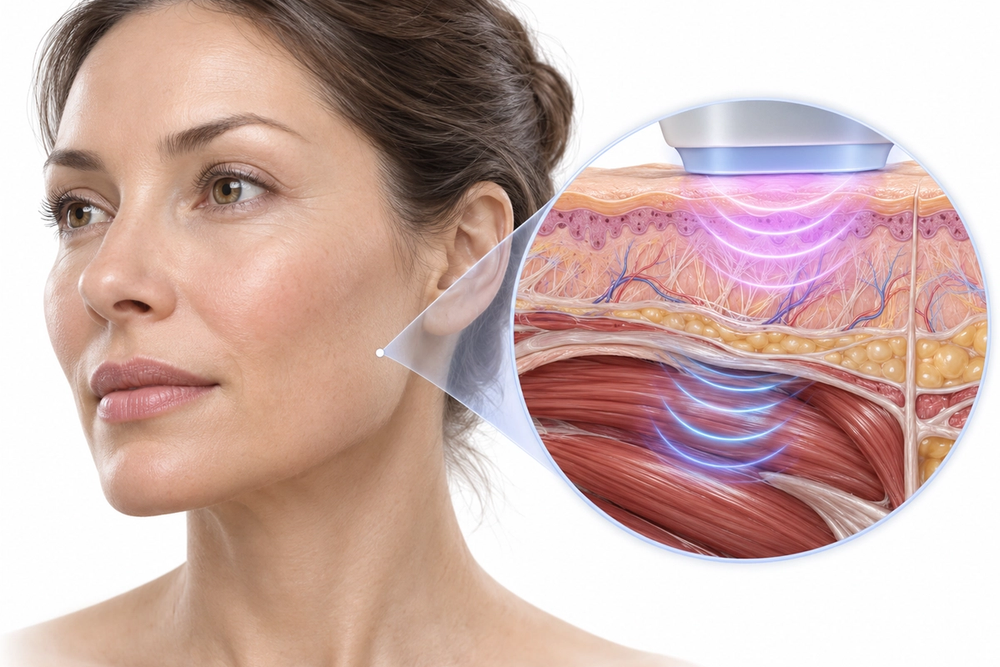
Can TriLift Tighten Your Face Without Surgery in Montreal?
TriLift combines facial muscle stimulation and radiofrequency to improve the appearance of facial tone and firmness. See how sessions, pricing, results and recovery work.
Read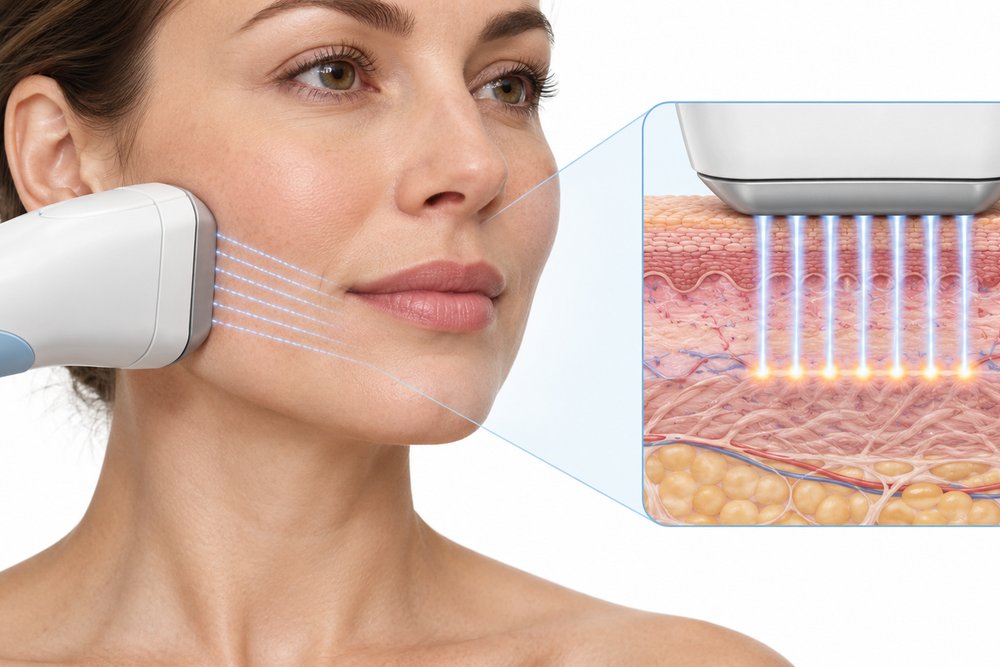
Does Sofwave tighten the face and neck without surgery?
Sofwave can improve mild facial and neck skin laxity without surgery. See how ultrasound treatment works, when results appear, what recovery involves, and Montreal prices.
Read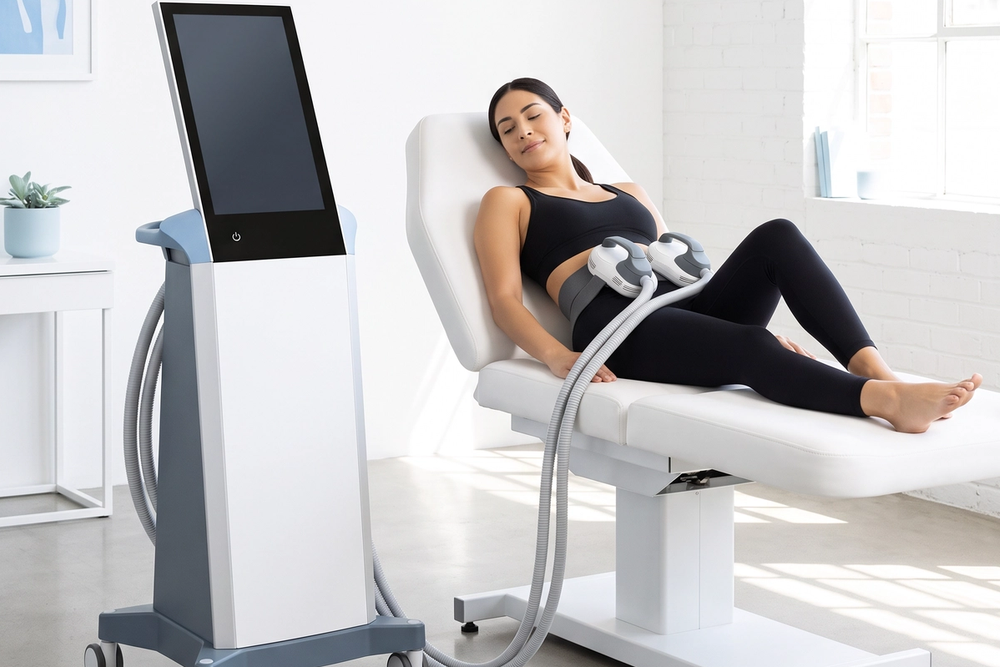
Body Contouring Compared: EMSCULPT NEO, CoolSculpting and Venus Bliss MAX
EMSCULPT NEO, CoolSculpting and Venus Bliss MAX reduce fat by three different mechanisms, and only two of them build muscle. Here is what each one does, which areas it treats, how many sessions to expect and how they combine.
Read