Blog
2026 · 8 min read
What Is the Forever Young Cycle for Year-Round Rejuvenation?
A smart 12-month rejuvenation plan uses 4 check-ins, not 4 mandatory treatments. See how movement, volume, collagen and skin quality can be reassessed through the year.
Key facts
- The Forever Young Cycle uses 4 reassessment points across 12 months, but a reassessment does not automatically mean a treatment.
- The current Canadian Botox Cosmetic monograph states that injection intervals should be no more frequent than every 3 months.
- Canadian Botox Cosmetic patient information describes effects lasting about 4 months for upper facial lines.
A practical Forever Young Cycle uses 4 reassessment points across 12 months, not 4 mandatory procedures. The goal is to review facial movement, volume, collagen support and skin quality, then treat only the areas that have meaningfully changed.
The right timing is different for every person. Your anatomy, previous treatments, product or device used, skin condition, sun exposure, goals and response to treatment all matter. In Quebec, the Collège des médecins du Québec emphasizes medical assessment and an individualized treatment plan in aesthetic medicine.
What is the Forever Young Cycle?
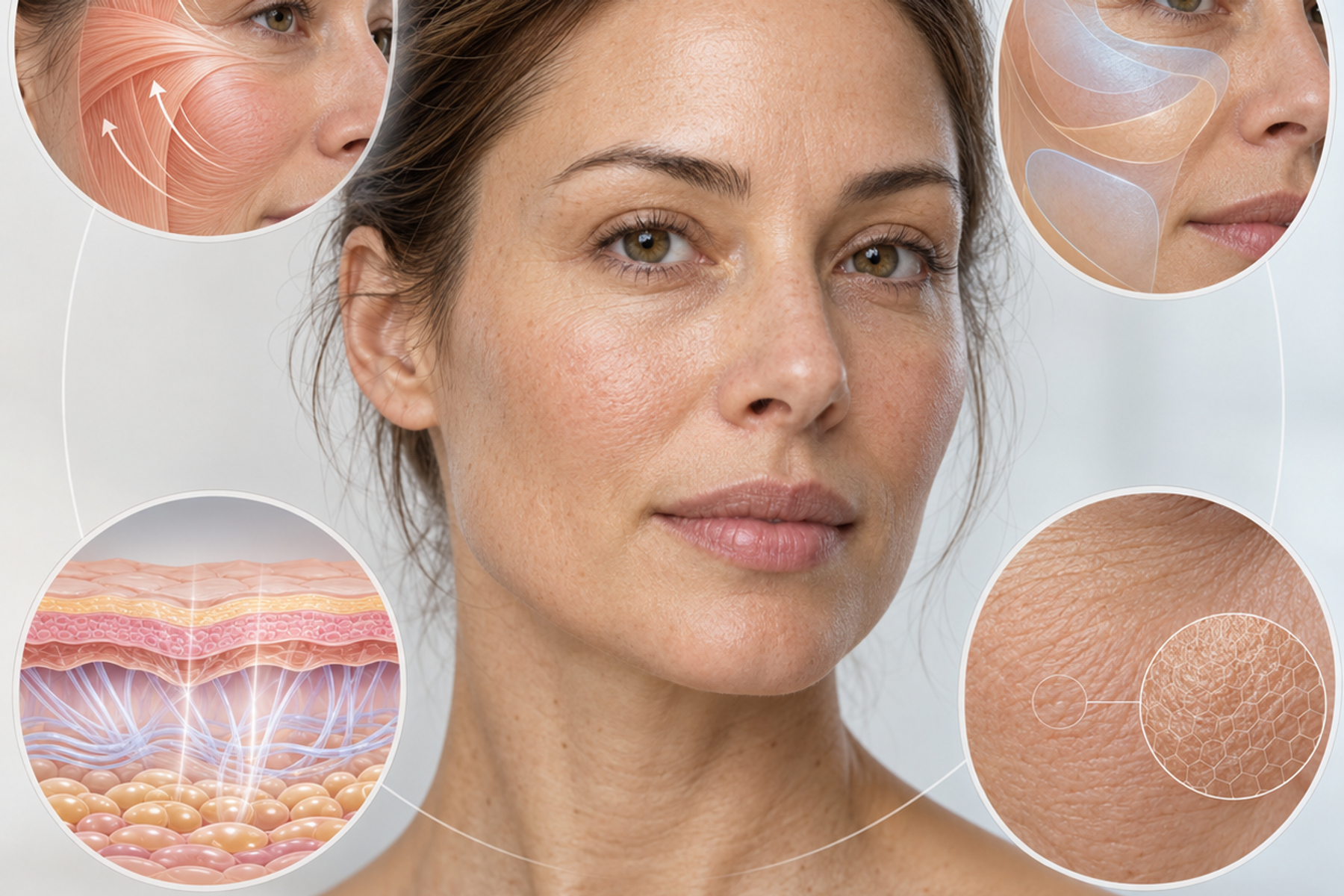
The Forever Young Cycle is a way to organize aesthetic care over a full year without turning the calendar into a treatment prescription. Think of it as four check-ins with four questions:
- Has facial movement returned enough to bother you?
- Has volume or structural support changed?
- Is skin laxity or collagen loss becoming more noticeable?
- Are texture, tone, pigment or surface changes the main concern now?
At some visits, the answer may be “nothing needs to be done.” At others, one focused treatment may make more sense than stacking several procedures.
This matters because facial aging does not happen in one layer. Muscle activity, volume, skin support and surface quality change differently. Expert consensus on combination facial rejuvenation supports individualized assessment and sequencing when botulinum toxin, fillers and energy-based devices are used together.
Why not repeat the same treatment every 3 months?
Because different treatments have different jobs and different timelines.
For expression lines, Botox in Montreal may be reassessed when muscle activity returns. The current Canadian Botox Cosmetic monograph states that treatment intervals should be no more frequent than every 3 months. Patient information in the same monograph describes effects lasting about 4 months for upper facial lines.
That does not mean everyone should book injections every 3 months. Some people prefer more movement between visits. Others notice their expression lines sooner. The plan should follow the return of the concern, the approved product guidance and the clinical assessment.
Fillers are even less suited to an automatic calendar. A 2026 systematic review of 24 studies found that measurable hyaluronic acid can persist well beyond 12 months in many treated areas, with durability affected by the product, anatomy and tissue movement. The review reported measurable persistence at 12 and 24 months in multiple studies. That is one reason hyaluronic acid fillers should be reassessed before more volume is added.
What could a 12-month rejuvenation plan look like?
A simple cycle can use four seasonal checkpoints without forcing one treatment into every season.
Checkpoint 1: What needs correcting right now?
Start with photographs, facial movement, volume, skin quality and the areas that matter most to you. If expression lines are the main concern, a neuromodulator may be considered. If volume loss is the issue, filler may be discussed. If laxity or skin quality is more important, an energy-based treatment may take priority.
The point of the first visit is to establish a baseline and choose the smallest useful plan, not to treat every possible concern.
Checkpoint 2: Has the first treatment settled, and what still needs attention?
The second checkpoint is about what remains after the first intervention has had time to show its effect. This is where a collagen-focused treatment can make sense for selected patients.
Sofwave skin tightening uses high-intensity parallel ultrasound. Clinical studies have assessed improvement after a single treatment, including follow-up at 1 and 3 months and, in another multicentre study, at 12 weeks. These timelines are useful because collagen-focused treatments are not judged the same way as an injectable that changes movement quickly.
A collagen treatment does not need to be repeated just because a new quarter has started. Reassessment should come first.
Checkpoint 3: Can I maintain results without adding more?
For many patients, the smartest mid-cycle appointment is a maintenance visit rather than a major procedure. That may mean reviewing skin care, photographs, muscle movement, pigment changes and how previous treatments are holding.
This is also a good time to avoid treatment creep, where small procedures get added simply because appointments are already on the calendar. If the face still looks balanced and the original concern remains controlled, waiting can be part of the plan.
Checkpoint 4: Is it time to work on texture, pigment or resurfacing?
Later in the year, some patients may want to focus on surface concerns such as rough texture, fine lines or photodamage. Fractional resurfacing and other energy-based procedures can play a different role from injectables because they focus on skin quality rather than facial volume or muscle movement.
For patients considering Secret Pro CO2 and RF microneedling or another laser-based treatment, sun exposure and aftercare need to be part of the timing discussion. A 2025 literature review found that broad-spectrum photoprotection is an important part of care after light and laser facial procedures.
In Montreal, some people find it easier to schedule resurfacing when their planned UV exposure is lower. That is a lifestyle consideration, not a rule. Laser timing should still be individualized to the device, treatment intensity, skin type and recovery plan.
Can Botox, fillers and energy treatments be combined?
Sometimes, but sequence matters.
A published consensus on combined facial aesthetic interventions notes that botulinum toxin and fillers can be performed together in selected same-day plans, while some energy-based treatments may need a particular sequence. When procedures are performed on separate days, the consensus group suggested that spacing treatments 1 to 2 weeks apart can allow side effects to settle and results to be assessed.
That is not a universal recipe for every device, filler or patient. The treatment area, technology, medical history and intended endpoint can change the order.
How do I know if I am doing too much?
The calendar should never be the only reason to add treatment. Practical warning signs that a plan needs reassessment include booking filler because “it has been a year,” adding several procedures before the previous result can be evaluated, or treating a new area at every visit without returning to the original goals.
A better question is: what has changed since the last set of photographs?
If movement has returned, reassess movement. If volume still looks balanced, leave it alone. If laxity is the main issue, discuss collagen support. If the face looks good but the skin surface is the concern, shift the plan toward skin quality.
That is the advantage of a cycle. It keeps the plan connected to what you see now.
What should I do between clinic visits?
Daily care is the part of rejuvenation that happens most often. Consistent sun protection matters because ultraviolet exposure contributes to photoaging, and photoprotection is especially important around laser and light-based procedures.
Between visits, keep the routine realistic. Use the skin care recommended for your skin type, follow treatment-specific aftercare, and take comparable photos rather than judging your face day to day. A three- or four-month comparison is often more useful than checking every morning.
Is the Forever Young Cycle right for everyone?
No fixed 12-month cycle fits everyone.
Someone using only Botox may need a very different schedule from someone focused on laxity, pigmentation or volume restoration. A person who has already had filler may need no additional filler during the year. A patient planning a collagen treatment may need time for gradual change before deciding whether anything else is necessary.
The safest starting point is a medical assessment and a plan that separates what you want to maintain from what genuinely needs correction.
What is the simplest way to think about year-round rejuvenation?
Use 4 checkpoints, but do not assume 4 treatments.
Reassess movement. Reassess volume. Reassess collagen support. Reassess skin quality. Then choose the least treatment needed to address the concern that is present now.
That is the idea behind the Forever Young Cycle: a whole-face plan that stays flexible, measured and connected to you throughout the year.
Results vary from person to person and are not guaranteed. Nothing here is medical advice — book a consultation and we will look at your case.
Keep reading
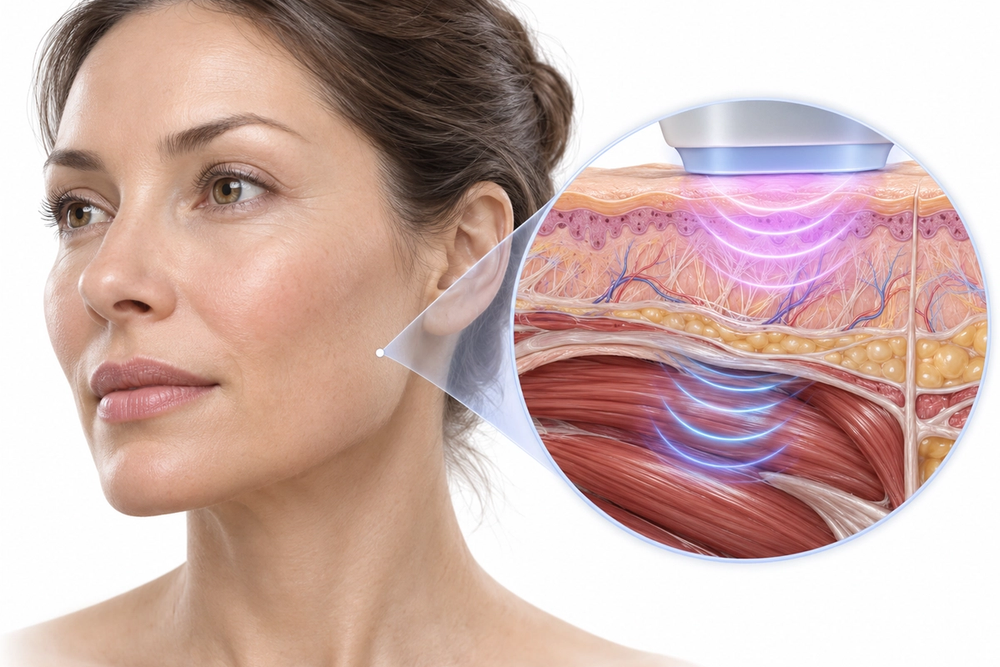
Can TriLift Tighten Your Face Without Surgery in Montreal?
TriLift combines facial muscle stimulation and radiofrequency to improve the appearance of facial tone and firmness. See how sessions, pricing, results and recovery work.
Read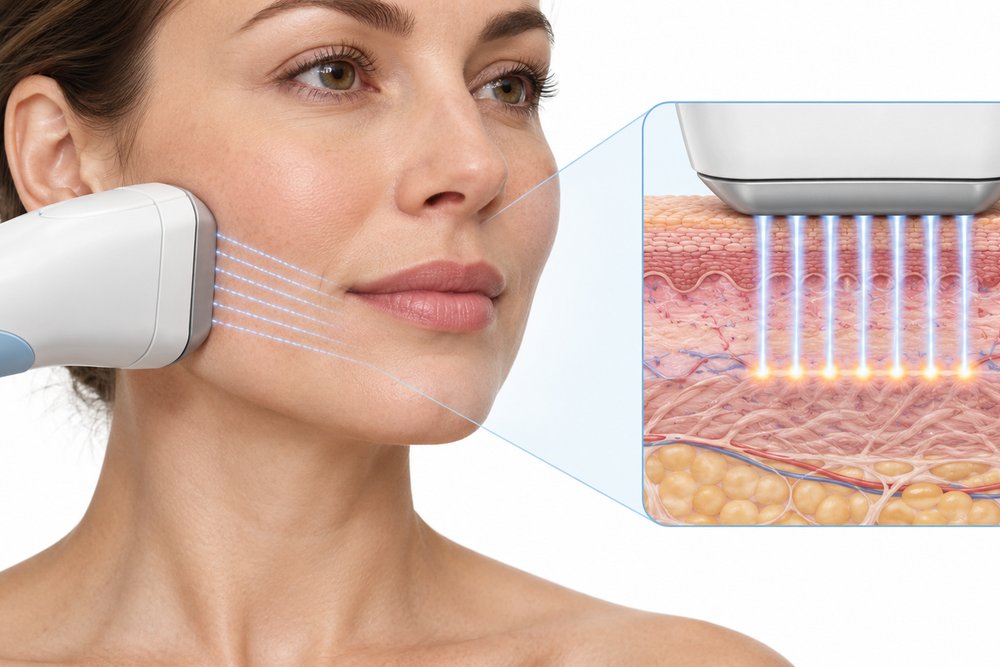
Does Sofwave tighten the face and neck without surgery?
Sofwave can improve mild facial and neck skin laxity without surgery. See how ultrasound treatment works, when results appear, what recovery involves, and Montreal prices.
Read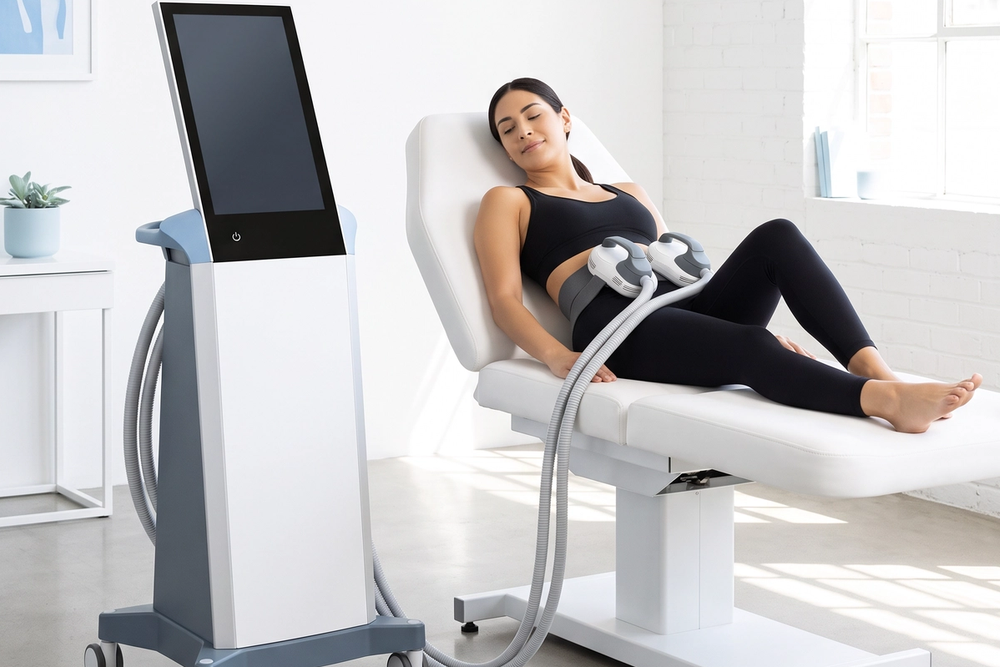
Body Contouring Compared: EMSCULPT NEO, CoolSculpting and Venus Bliss MAX
EMSCULPT NEO, CoolSculpting and Venus Bliss MAX reduce fat by three different mechanisms, and only two of them build muscle. Here is what each one does, which areas it treats, how many sessions to expect and how they combine.
Read